When in September I arrived in the capital of Vietnam for my European Solidarity Corps Humanitarian Aid volunteering, I started to miss home in the very first week. The time seemed to pass very slowly. So slowly, that I started to cry. The vision of the entire 10 months passing by soooooo lazily made me feel miserable. To help myself cope with it, at the end of my notebook dedicated to learning Vietnamese language, I drew 43 empty squares – one for each week ahead of me in Hanoi at the time. The idea was that every Friday I would check one box off to mark a week done.
In the end, I marked only two. Then I started to get into a routine, meet new people, see new places, eat delicious food. The time simply sped up, and I forgot.
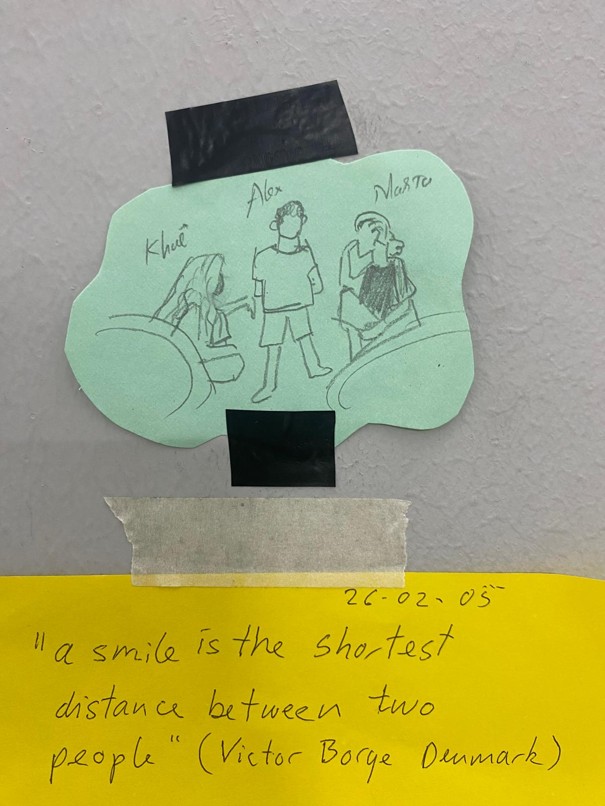
Hello, my name is Marta! Last month I came back home after nearly a year of volunteering abroad as a part of European Solidarity Corps. I titled this post “The Fastest 10 Months of My Life” because the 10 months I spent in Vietnam truly passed by very quickly. Once I settled into my routine, I started counting the time with “how long until my next visa-run?”. And can you blame me? It’s a pretty unique characteristic of the SASID (Solidarity Action for Sustainable and Inclusive Development) project that allowed me to explore other countries in Asia as well and broaden my horizons even more. Those visa-runs were like milestones of sorts. More important is of course what I was doing as a part of my volunteering activities.
It’s what I went to Vietnam for. It’s what took up so much of my time spent there.
At the Center for Sustainable Development Studies (CSDS), the NGO I was hosted by, the schedule was never fully stable due to the nature of certain projects we were involved in. One such project was the Language Labs (LLs), where Vietnamese people aged 15+ could book 1-1 foreign language sessions with the volunteers at an affordable price. The proceeds went to the Bright Future Fund scholarship for students from disadvantaged background and the upkeep of the café. These 1-1 sessions were focused on improving confidence through speaking in the target language. Occasionally the topics were very specific, such as preparations for a job interview. The schedule was never fully stable because the 1-1 sessions could change from one week to the next – sometimes I had 2 sessions per week, sometimes 11. As you can see, it varied a lot by how busy the week was. Since most of the LL participants were students, it generally depended on the timing of the exam sessions. The ones who were already in the workforce could usually only have classes in the late afternoon or evening, so throughout our volunteering experience we often had classes in the evening. Of course, we didn’t have to accept them, and if we did then we could take some time off another day. Thanks to that, we had quite a lot of power over our schedules. It made our lives much more convenient and allowed us to enjoy events in Hanoi that we otherwise would not have been able to partake in.

The Language Labs took place in SociHub Café. It’s a cute two-story building in Mai Dich district of Hanoi owned by CSDS. On the first floor there are usually English language community classes (we shorten it to comclasses) for adults or kids. They last between 1,5 to 2 hours and they are all about improving speaking – just like 1-1s, just in a group and with a set curriculum. So, if you happen to ever lead a comclass at SociHub, don’t look for a textbook online to use. Instead, think of some fun activities! Roleplays are good for all levels. They can be also exceptionally hilarious. For example, there was one time when we’ve had a class with the theme “Future”. So, because it was a class with lower intermediate level participants who still didn’t have a full grasp on the grammar, we first quickly covered the future tense. To practice using it in speech, I prepared a roleplay activity. On the projector, I showed the participants a quick guide to palmistry. In pairs, they were supposed to use it and prepare a short conversation between a customer and a witch. The goal was for both parties to use the future tense by asking questions about the future and predicting it – and it worked amazingly! It turned out to be really funny too. For more advanced participants, you could organise a mini debate or discussion. At that level, it’s important that they practice argumentation skills. The participants can’t just say that they prefer a motorcycle over a car – they also need to practice answering the why. From the teacher’s perspective, what makes comclasses so great is that people who sign up and come actually choose to do so. Therefore, they want to learn and they are motivated to improve. If you ever taught anyone who was not interested in listening and did not care about the topic, then you know that it makes a lot of difference.
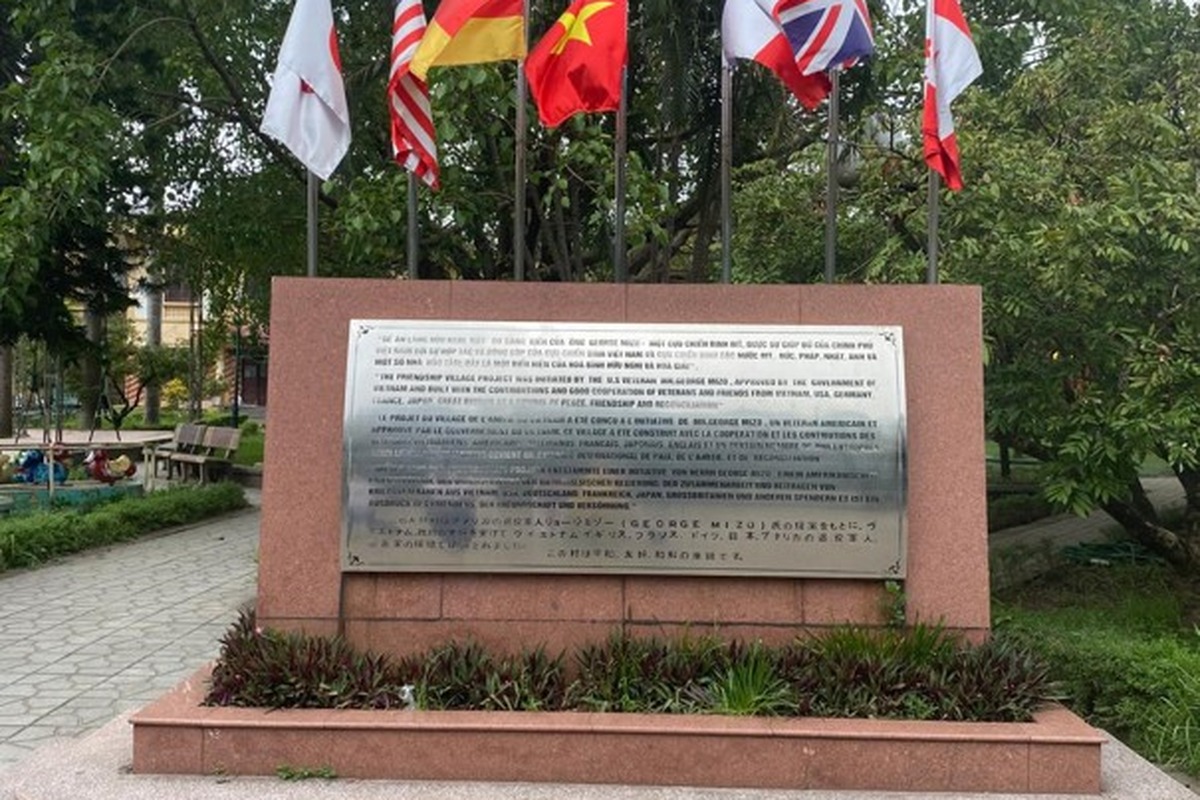
While LLs and comclasses were a part of my activities for the majority of my volunteering, we’ve had several short-term projects too. One such project was teaching a foreign language (usually English or German) at a local vocational college. We lead classes two times per week for four different majors. This meant that each week we’ve had some working hours dedicated to lesson planning for the following week. The goal of these classes was for the students to practice their speaking skills. Some of my fellow ESC volunteers also went to one of the local kindergartens, where they helped the caretakers with taking care of the children. They also prepared easy English language activities for them. They always talked about their time there with fondness. Another project, perhaps the most meaningful one, is the Friendship Village. In my opinion, it is also the most challenging one, because it doesn’t just require you to organise activities, but also have a great emotional capacity and empathy. Not everyone is capable of that – me included. Friendship Village is a place where many victims of Agent Orange live. Agent Orange was a herbicide used by the U.S. military during the Vietnam War (or American War, as it is called in Vietnam, which I think is more suitable). It causes dangerous health complications, such as cancer, and birth defects in the descendants of the people exposed to it. That’s why even nowadays new victims of this horrible chemical are born in Vietnam. This is also why Friendship Village is such a relevant project.
My last 10 months beyond SociHub Café
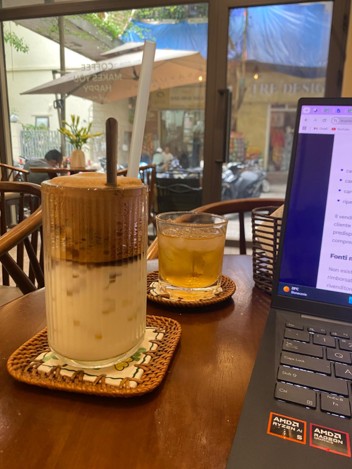
Hanoi is a particularly amazing place to be if you are a coffee lover! However, even if you’re not fond of coffee, you’ll find something for your taste. Vietnam in general is quite big on cold drinks, so on pretty much every street you can find a café or a stall selling smoothies. There are many flavours, but these three are the most reoccurring – avocado, mango, and avocado and mango. All very delicious! Sugarcane juice is also very popular, as well as a pineapple one. In other words, it’s hard not to find something you will like. Because of that, going to cafés was one of my favourite things to do. Specifically, I was going to many different ones to find the best bac xiu, or white Vietnamese coffee. Different places make it a bit differently. Bac xiu is an iced coffee with fresh milk and condensed milk. It’s really delicious. And I’m saying it as someone who only ever consumed coffee in tiramisu before coming to Vietnam! So, this was one of my favourite past times in Hanoi – going to different cafés and trying different drinks, especially bac xiu. Considering that Vietnam also has a big coffee culture, I feel like it was a great way to get to know Vietnam more. And if the cafés are all very cute and the drinks are delicious – well, who can blame me for spending my time like that? Especially since some have cats =).

Besides going café-hopping, I also studied French, which I started doing a year earlier. Furthermore, for some time we’ve had Vietnamese language classes organised by the CSDS staff for us. They were amazing, and thanks to them I was able to order food or drinks in Vietnamese! In fact, a fellow volunteer was so determined to learn Vietnamese that he signed up for classes at an actual language school. It certainly paid off, he’s really good. Last time I saw him, he could hold full conversations with Vietnamese people. Another volunteer took up playing ukulele. I think he made a pretty good progress, though I can’t say I know too much about that instrument. Our volunteering was flexible enough to allow us to pursue our interests without any worries, especially when we consider that CSDS provided us with monthly bus passes. It made getting into a routine much easier.
Sometimes we travelled. With some other volunteers I went to Ninh Binh and Mai Chau. On my own I went to Ho Chi Minh City, Da Nang, and Hoi An. I was also once invited to the hometown of one of the local volunteers at CSDS. It gave me an opportunity to observe a local festival and more rural life in Vietnam. Beyond that, every volunteer who stayed for more than 3 months had to do at least one visa run for a few days. This meant that every 3 months we had to leave the country to renew our visa. I was very lucky to have gotten that opportunity, because thanks to it I was able to travel to nearby countries and observe the differences between their cultures and the Vietnamese.
I often hung out with other volunteers. One time we went to a workshop in Hanoi to sew birds and drink coffee. It was super fun! Together we made another culinary discovery – che. Che is a sweet soup, often made with coconut milk. It’s served with chopped fruits and jellies in it, but you can also find a version with green and/or red beans. You can make it even more refreshing by adding ice. It’s an amazing thing to eat together on one of those evenings where the temperature is still 30 degrees Celcius.
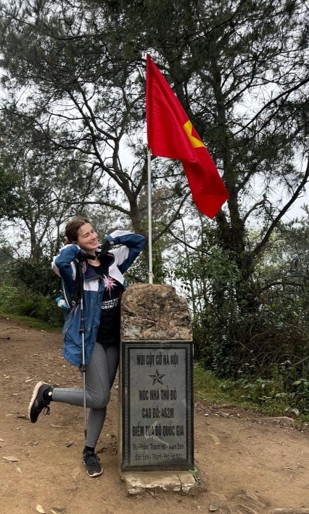
This volunteering experience gave me so many opportunities to make new friends, both Vietnamese and not, from countries such as France, United States, Saudi Arabia, Spain, and more. I believe that the people you are surrounded by truly make or break your experience. And thankfully, CSDS is the kind of place that brings together people who are kind, empathetic, and always wiling to help people in need. And while I didn’t achieve my goal of studying Vietnamese up to A2 level, I grew in ways I never imagined I would. It can be scary at first to go to a country do far away for nearly a year – trust me, I know! But if you do decide to do it, know that you will be supported on every step of the way. That’s why I encourage every reader who got this far in this text to apply! =)
Marta Jowko