I came to İzmir through the European Solidarity Corps to volunteer with Pi Gençlik. My main activities involved organizing English and French conversation clubs, helping participants practice languages in a relaxed and welcoming environment. On paper, the concept is simple. In practice, it became a very enriching intercultural experience.
A conversation club is much more than language learning. It is a place where confidence grows. Week after week, I could see some participants initially struggling to put a sentence together, becoming capable of telling stories made of 5 or more sentences, as well as debating topics, and making jokes in a foreign language.
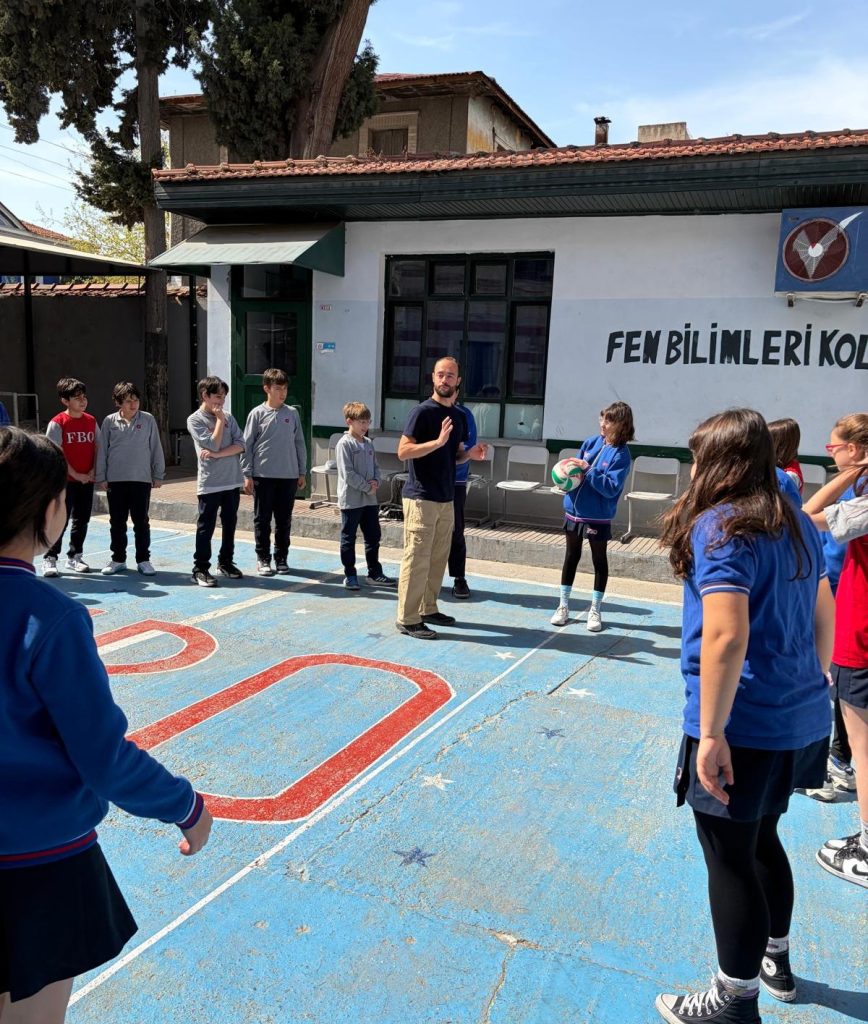
The activity that I and which they also enjoyed the most was the small debate. It’s quite straightforward : I was just make them stand up, before telling them, as an example : if you are rather a cat lover, go to my right; whereas if you are a dog lover, go to my left. Then, The debate would just start this way, with the room split in 2 teams. Small trick : if one person got really convinced by the other side, then he or she was allowed to change side and continue debating but in the other team.
Another very popular activity were theatre-like small role-plays. I would ask them to act as a lost tourist abroad looking for help, or as a marketing specialist trying to sell the last fancy product than nobody has seen before.
In a couple of groups, several students even asked me whether I would still be here next year, and got a bit sad when I answered that it was unsure yet. It was a simple question, but one that revealed how strong the bonds had become.
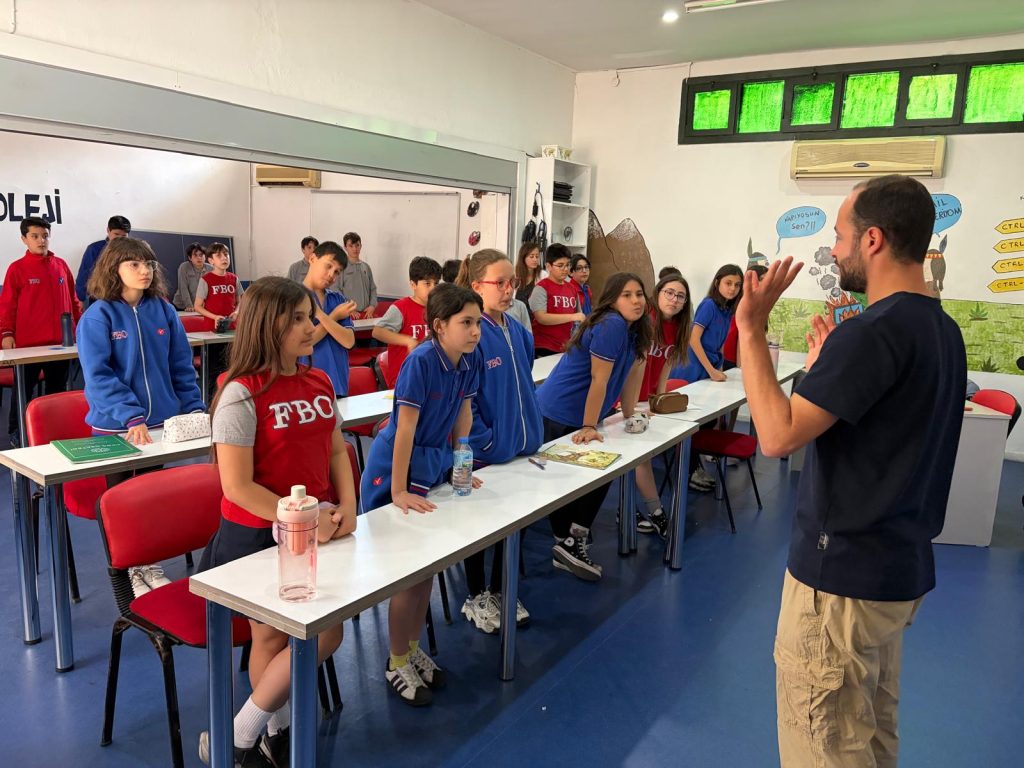
Outside the language clubs, I also had the opportunity to participate in democracy and children’s rights workshops in middle schools and high schools. It was a nice way to do some teamwork with other international volunteers, both while preparing the workshops and also while leading them.
These workshops took place around Çocuk Bayramı, Türkiye’s National Sovereignty and Children’s Day, a national holiday instated by Mustafa Kemal Atatürk, to underline the importance given to children and future generations for the country.
The teenagers actually surprised me. Before entering the classrooms, I assumed I would mainly be sharing knowledge. Instead, I often found myself learning from them. Many teenagers demonstrated a strong awareness of their rights and responsibilities. Some were remarkably articulate and engaged. More than once, I found myself thinking that they seemed more informed on these topics than I had been at their age in France.
Experiences like these reminded me that cultural exchange is never a one-way process.
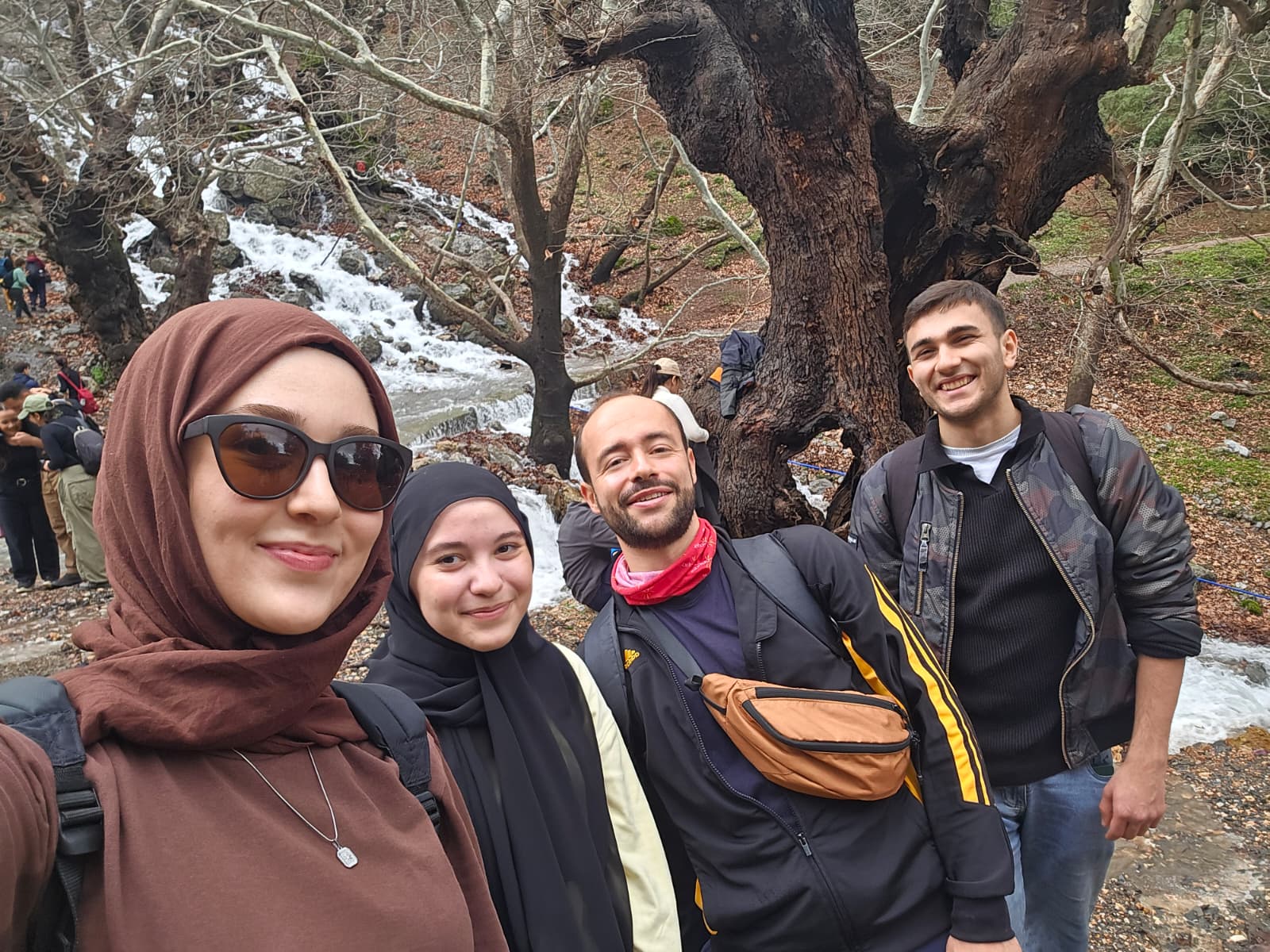
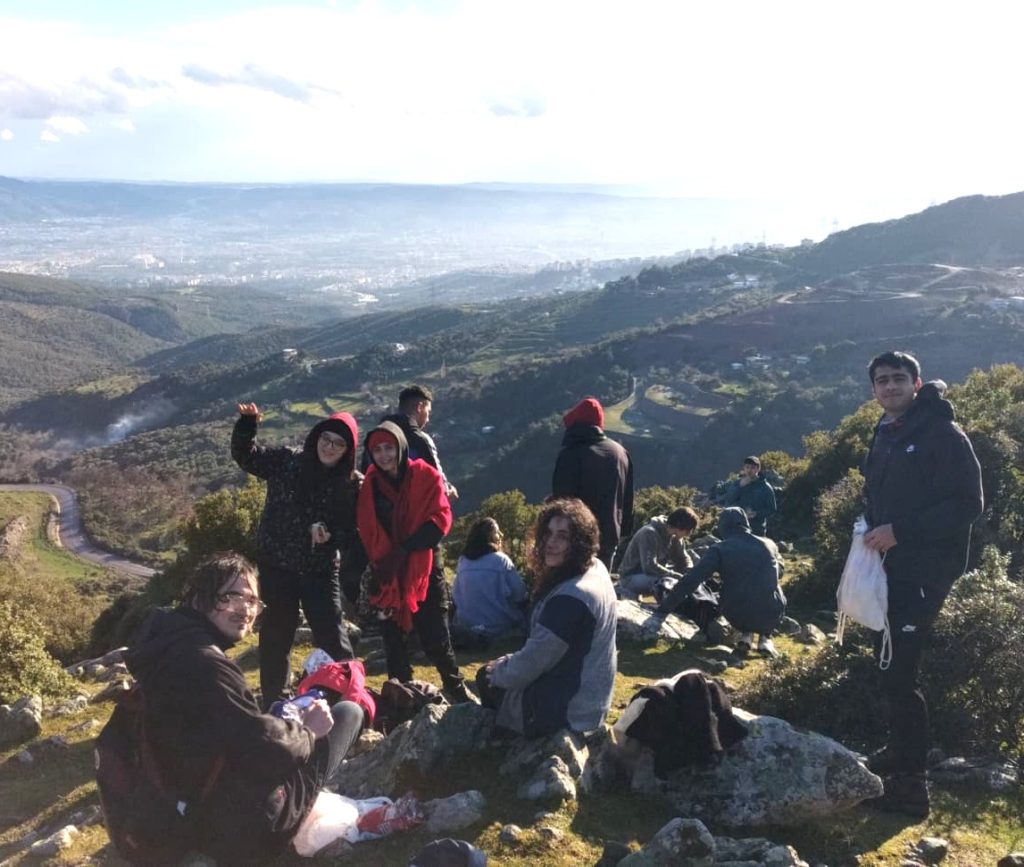
Some of my favorite memories from this year happened on completely different environment than classrooms, namely in hiking trails. Hours of walking naturally led to deeper conversations toward personal ambitions, travel experiences, family stories, cultural differences, and future plans. By the end of the day everyone was physically tired but mentally refreshed… And was asking for the next hiking date! Which is always the best reward one can have.
Some participants also told me that such activity in nature it was breaking their routine and felt so much different from conversations in cafés, surrounded by the city noise and rushy atmosphere. This is very true : there is no pressure to leave after finishing a drink, no distractions from traffic or crowded streets… There is only the nature to observe and your own steps on the ground to hear… The result, they said, was deeper conversations and greater peace of mind.
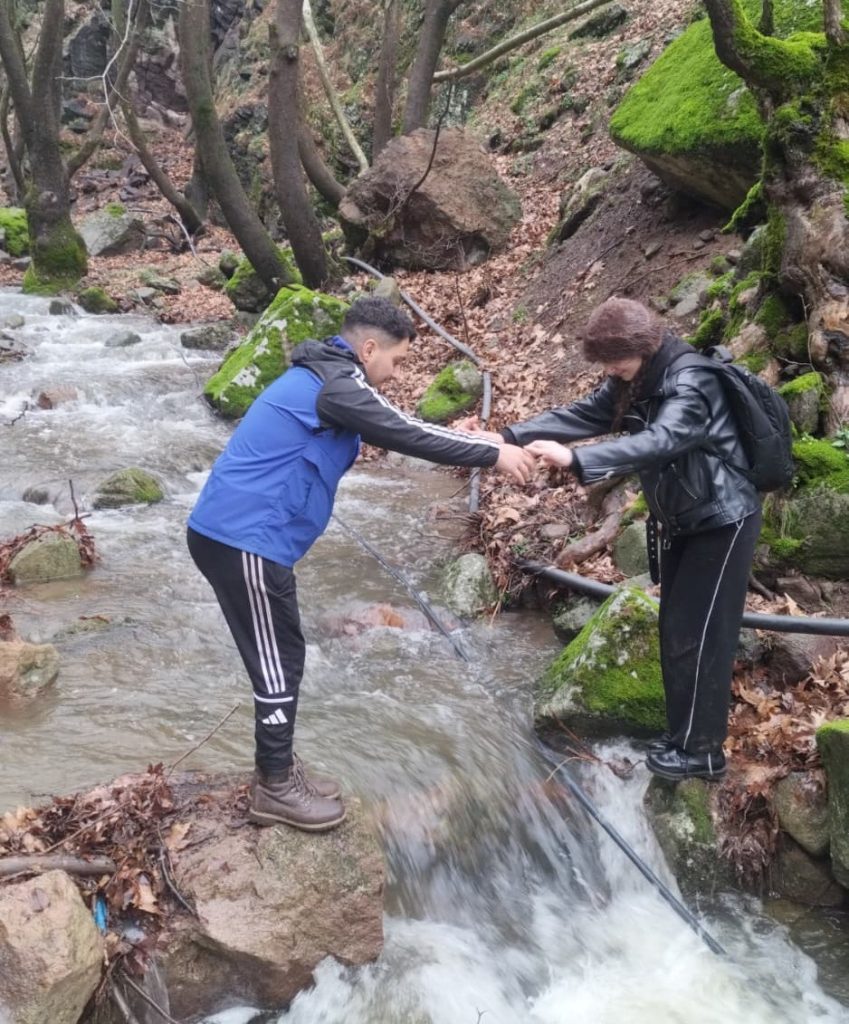
Looking back, I am not sure many of us could have completed that hike alone. Together, however, we managed it. What could have been a difficult day became one of the strongest examples of teamwork I witnessed during my entire volunteering experience. And it was also so much fun!
After this rainy and sometimes cold winter, spring eventually arrived and seemed to transform the city overnight. Parks filled with families and groups of friends. Picnics appeared everywhere. Evenings became longer, livelier, and more social. One of the things I loved most about İzmir was how people genuinely use public spaces. Rather than simply passing through them, they inhabit them.
At the same time, I continued learning Turkish through daily interactions, language exchanges, and many Anki flashcards. Months later, I am still discovering new expressions and idioms. Some are impossible to translate directly. Those moments of linguistic confusion often became my favorite ones because they revealed ways of thinking that cannot easily be transported from one language into another.
Beyond volunteering itself, this year became an extraordinary period of exploration.
I have always been fascinated by Greek history and the ancient Mediterranean world. Living in western Türkiye gave me a unique opportunity to continue that passion. By the end of my volunteering project, I will have spent 42 weeks in İzmir and visited 47 ancient Greek cities or archaeological sites.
Without planning it, I somehow ended up averaging more than one site per week.
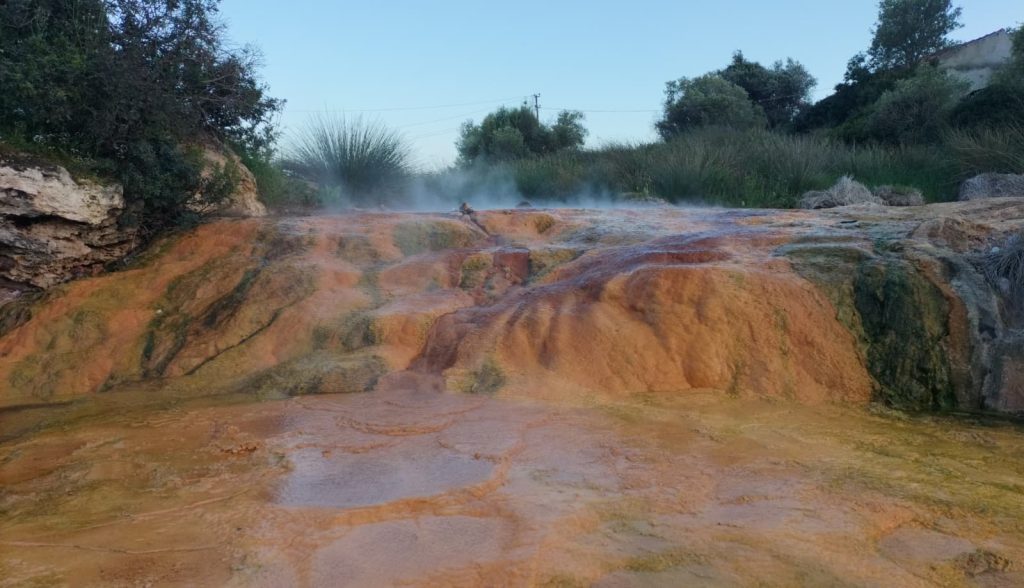
Some were famous places known around the world. Others were little more than a couple of white stones overlooking the sea. There were also some sites connected to geological wonders, like the Roman Geothermal Bath Ruins of Doganbey, full of colours.
Together, they helped me understand the Aegean in a completely different way. Rather than seeing separate countries, I began seeing a deeply interconnected region shaped by geography, trade, migration, and centuries of shared history.
The Greek islands played a major role in that realization.
Let me develop : every time I went to the coast around İzmir, the Greek islands were there, looking at me. Samos was in front of Özdere and Kusadasi; Lesbos was in front of Ayvalik, Chios was in front of Cesme. Depending on the weather, sometimes they appeared as faint silhouettes on the horizon. Sometimes they seemed surprisingly close, floating above the sea in the clear Aegean light. For months, I I could see at them from Turkish beaches and coastal roads. Eventually, curiosity won!
So, I had the chance to visit Chios, Lesbos, and Samos. They seemed both so close and so far from Izmir and Türkiye in general. So close because the geography, the beaches, the mountains, are very similar… But, perhaps more importantly, they are close thanks to the people. The cultural habits, the gestures, the hospitality, the way people look, the atmosphere in small cafes in remote and forgotten villages, as well as the food. So far because of the obvious religious and language difference, as well as Greece being part of the European Union while Türkiye does not.
Coming back from these Greek islands, I shared my experience of how close the people and the cultures are to my Turkish friends. Maybe this was my little attempt to get them closer from each other. I find it really a pity and a missed opportunity that economic and social connections remain more limited than they could be. The Aegean is not a vast ocean separating distant peoples. In many places it feels more like a narrow channel connecting neighbors. Anyways, to my Turkish friends, these observations sometimes it sparked debates, sometimes laughter, but I always meant it sincerely.
I even enjoyed a small luxury that I hadn’t in more than 6 months in my daily life in Türkiye: eating pork again while visiting the islands.
Coming back to this connection between Anatolia and the Aegean Sea, one trip captured this feeling perfectly.
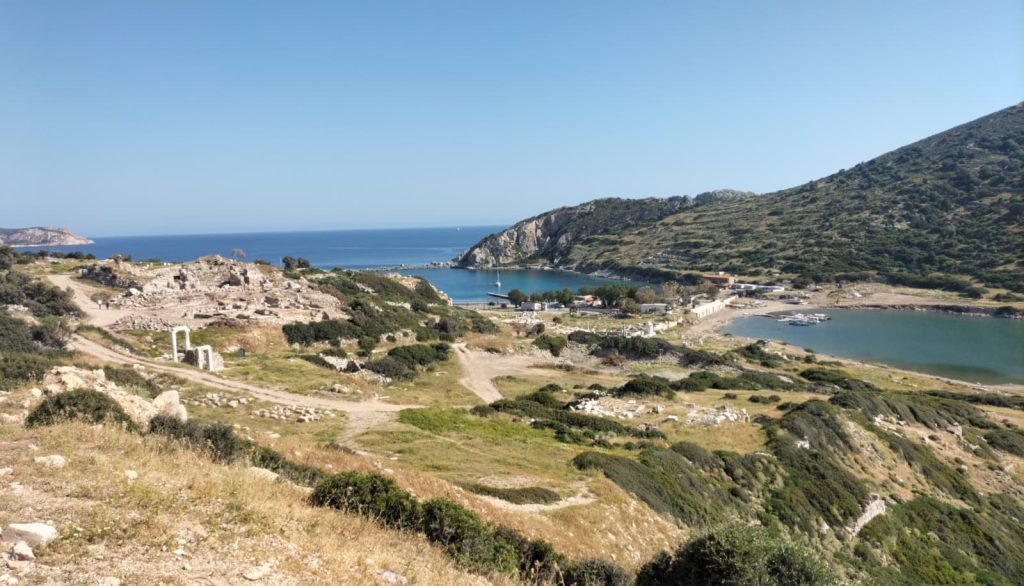
At the very end of the Datça Peninsula, west of the very touristic and beautiful Marmaris, I visited Knidos with a friend. The journey itself felt like travelling to the edge of the map. Surrounded by sea and cut from major cities by mountains, while facing so many Greek islands, Knidos felt less like mainland Anatolia and more like a remote Greek island accidentally attached to the continent. I highly recommend it.
Moments like these constantly challenged my assumptions about geography and identity.
Not all my travels were archaeological.
I also rediscovered something much simpler: camping.
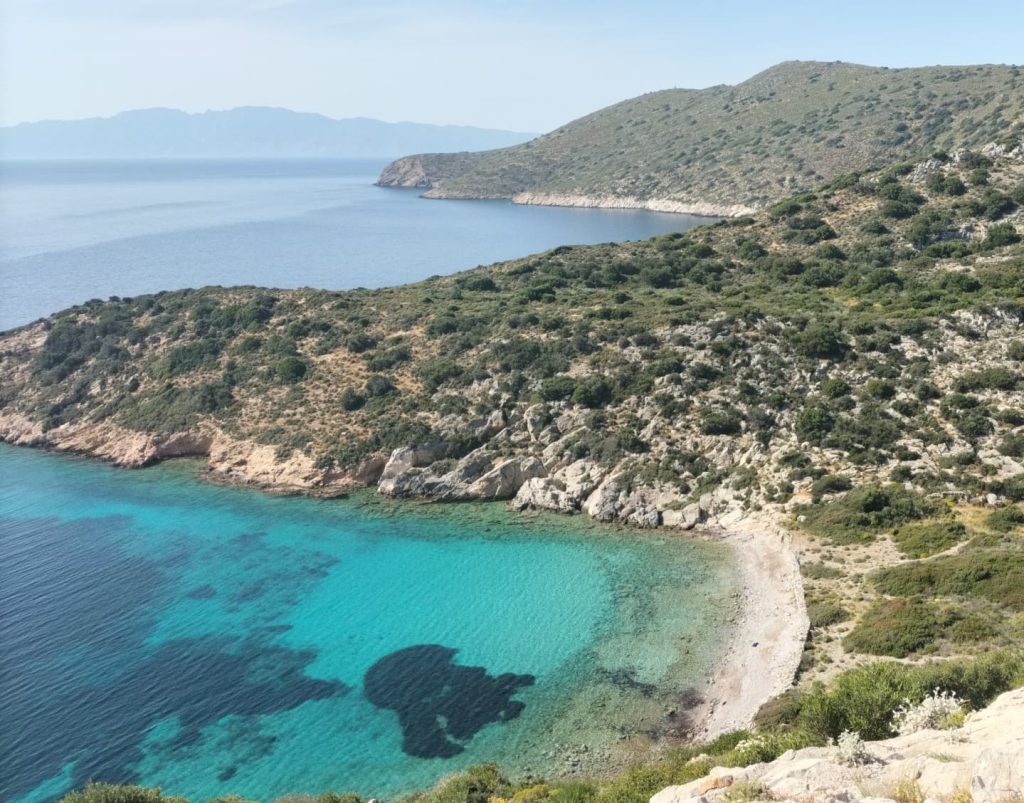
Some of my favorite weekends were spent around the Karaburun Peninsula. My ideal routine quickly became obvious. Wake up. Walk directly into the sea. Swim before breakfast. Take a shower. Then enjoy an open-buffet breakfast with locally grown products, including olive coming from trees under which I had put my tent.
I would like to end with one last fact I did not mention enough : even in the challenging economical context for many people here in Türkiye, once thing than never changes and that is incredibly worthy is both the readiness, the need and the will to have fun and to laugh. I found it to be the the most direct way to interact, in almost every context; be it while waiting for a bus, going at a cafe or a restaurant, singing karaoke, reflection during a workshop… It is definitely one of my favorite aspects. To Turks : please, don’t change!
PS : Animals in Türkiye are also quite funny.
Paul Bacquet