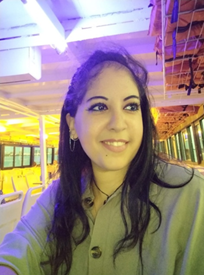
I am Sarah from Italy, the country I come from and in which I was born, but Egypt is woven into my roots, that is why I have double citizenship. I cherish both identities and the stories they carry, finding a sense of belonging in each of them. Together, they form the unique cultural mosaic that shapes my journey.
The meeting of the two continents which I belong to and their respective cultures within my own identity. It has always given me a broader perspective on the world. North and South, East and West – at times, these worlds seem remarkably similar, connected by shared values, emotions, and aspirations. At other times, however, they appear distant from one another, shaped by differences that can lead to misunderstanding, conflict, and division. Growing up between these cultural spheres has allowed me to observe both their contrasts and their common ground. It has taught me that reality is rarely one dimensional and that understanding often lies in the space between different perspectives. My cultural background has deeply influenced the way I approach people, places, and experiences. It has shaped the lens through which I see the world and, consequently, the way I lived this volunteering journey. Understanding where I come from is essential to understanding how I interpreted the challenges, encounters, and lessons that accompanied me throughout this experience.
Not only that, but as a linguistic and cultural mediator who worked with migrants and refugees in Italy, I am very familiar with the humanitarian sector. It was precisely this experience that gave me an additional motivation to apply for an ESC humanitarian project abroad, both as a continuation of what had been my profession in Italy and as an opportunity to work and offer my small and humble contribution within a new context, society and community.
But why am I telling you all of this in a story about my volunteering experience?
My journey in Brazil began towards the end of November 2025 and ended towards the end of May of this year. During these months I understand something essential: the importance of embracing difference. It taught me that what is different often inspires far more fear than we like to admit, and that those who do not fit into familiar categories still face significant challenges in being accepted. Throughout this journey, I came to realize how easily people can be judged, excluded, or misunderstood simply because they 1 come from a different background, hold different beliefs, or see the world through a different lens. Yet it is precisely these differences that enrich our communities, broaden our perspectives, and create opportunities for growth.
From a socio-cultural perspective, Umbuntu (the project I was part of) – although it is not the only one in Brazil for this category – represents an example of the challenges and opportunities surrounding the acceptance of diversity. The project’s beneficiaries are members of the Afro-descendant community of southern Brazil, particularly in the state of Rio Grande do Sul.
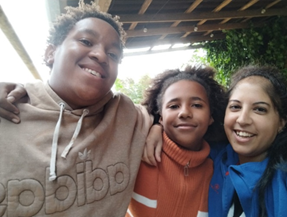
As a European woman of African descent, deeply proud to be Egyptian, I have always personally experienced situations of racism and discrimination. People, in general, think that racism is directed only towards Black people around the world, but during my time at Umbuntu and through conversations with the project beneficiaries, with whom I share common ancestry, we had the opportunity to discuss this issue and to convey my point of view. One of the first forms of discrimination that I have always experienced throughout my life, just as they experience in their daily lives, is due to the colour of my skin, my Egyptian surname, my non typically European features, my entirely African heritage and the inability of Western societies to recognise beauty in diversity, cultural enrichment in the broadening of their territories, and, within millions of shades, an immensity of colours.
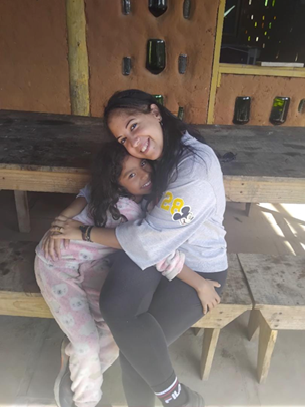
At Umbuntu, you will know this extraordinary and delightfully eccentric Afro-Brazilian community and embrace the unique stories of these people: you can chat with Naty the chef while she prepares almoço in the kitchen, face Jessica in a jiu-jitsu match, talk about football with Bolacha, laugh and joke with Juliana and Matheus, and spend time with many other remarkable individuals. But above all, what will gratify you the most and bring you the greatest sense of fulfilment during this project is the love you will receive from the children. A simple smile, their warmth, and the immense affection they give you can never be compared to that of adults.
This is why I can say that, Brazil is a country of a thousand shades: because it is a country of many colours, certainly not because of the Amazon rainforest 😀 , but because people from very diverse backgrounds live within the same territory. It is undoubtedly a country that can impress and fascinate you, but at the same time surprise and disappoint you. You will learn to recognize the lingering shadow of European colonialism, but also the extraordinary resilience, determination, and strength of Afro-Brazilian, Indigenous, and local communities in their ongoing struggle for recognition and self-affirmation.
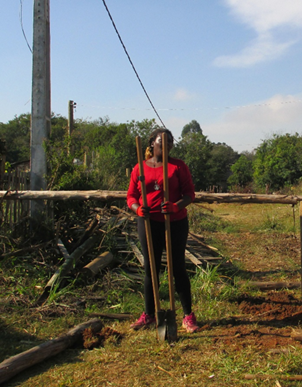
Certainly, as a volunteer at Umbuntu, you should know is that much of the work revolves around gardening and caring for the project’s green spaces. So, if you’re looking to work on your six-pack, be prepared to spend plenty of time digging, planting, and turning the soil! But attention please 😀 You should also learn to respect the pace of nature and the rhythm of the plants, because once the seeds have been planted, an entire period of growth and development follows! Watching a seed transform into a thriving plant can be surprisingly rewarding, reminding you that meaningful growth – whether in nature or in ourselves – takes time, care, and perseverance. Therefore, life in the garden is a bit like a roller coaster: it is lived through ups and downs. Working in the vegetable garden is not always a bed of roses. It can be physically demanding, messy, and sometimes exhausting under the sun. But if you have a good connection with nature and don’t mind getting your hands dirty, then go for it!
From time to time, depending on the project’s needs and circumstances, you may also have the opportunity to take part in construction work. For example, starting in April, we contributed to the building of a new house for one of the project’s beneficiaries.
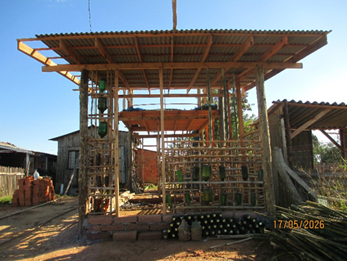
So, if you enjoy carpentry, construction, or hands-on practical work, this might be an exciting challenge for you. But be careful here as well: you may find yourself moving around the Umbu neighbourhood alongside carts loaded with soil, sand, and cement. And almost always, when heavy materials need to be transported, you might discover that the most reliable means of transportation is… yourself!
Did you think I had forgotten to tell you about the bananas?
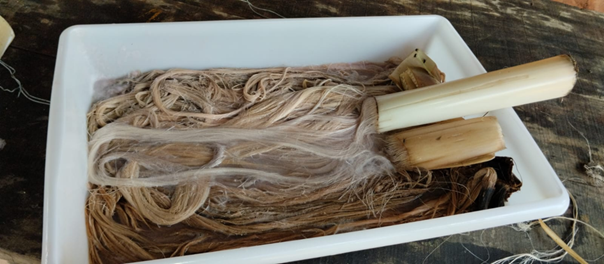
Think again! Well, actually, the idea of producing hair extensions from banana fibres is still an experiment that has not yet succeeded in the Umbuntu project. It is part of a very complex project that requires patience, time, and a great willingness to try and try again until the right path is found. So don’t worry, there is still plenty of room for curiosity, learning, and experimentation. You may find yourself spending time with the beneficiaries working with banana fibres, even “combing” them, as part of the process, while waiting for that moment when everything finally clicks and the real breakthrough happens.
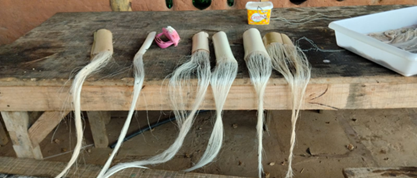
After all, this is exactly what makes the experience so meaningful: not only the results, but the journey itself, made of small attempts, shared laughter, and the hope that one day the magic will happen!
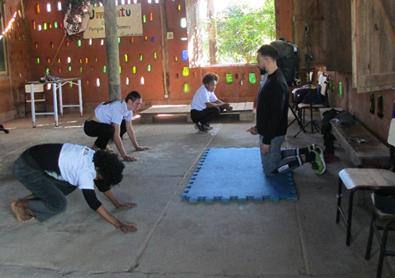
And if you still feel the need to release even more adrenaline, you can take part in capoeira training, a traditional Brazilian dance and martial art, or join the full band in maracatu, playing music together in a vibrant and collective rhythm.
Maracatu is the activity that has given the greatest visibility to the entire group, as it allows the young people involved to be seen and heard by a wide and diverse audience. Through performances and public events, they have the opportunity to share their culture and presence in very different spaces. Performances can take place in a favela, in a community centre or church space, as well as in public squares, parks, and streets. Moving through these different contexts, the group brings music and rhythm directly to people, making themselves known beyond fixed boundaries and reaching audiences that might otherwise never encounter them. However, it is important to know that performing at events is not a regular activity within the project.
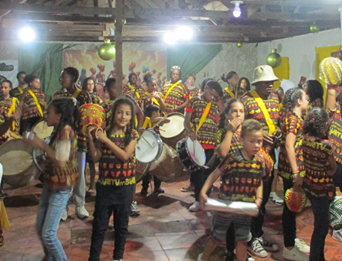
It depends entirely on external requests and donations, which means it happens only occasionally. For this reason, you should be aware that more than 90% of your time in the project will be dedicated to gardening and work in the vegetable garden. This is the core of the experience and it is where most of the learning, effort, and daily involvement takes place. While cultural activities such as music and performances can offer meaningful and exciting moments of visibility, they remain sporadic. The heart of the project lies instead in the daily, hands-on work with the land, the plants, and the rhythm of nature.
And now, if you are wondering how much free time you will have to explore the rest of Brazil? Don’t worry. There will be, for sure, moments to rest, to breathe, and to discover what lies beyond the project itself. Your free time will allow you to get to know the surroundings, meet new people, and gradually experience the country outside the volunteering context.
In the end, the experience is not only about the work you do, but also about the places you see, the people you meet and the way you learn to navigate a new environment both inside and outside the project.
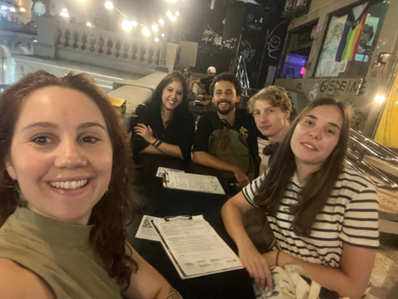
For example, we were invited to the book launch event (in the beautiful cultural centre Cirandar in Porto Alegre) of Charlotte Dafol, a former volunteer in Brazil who is now a filmmaker and an within activist Brazil’s Landless Workers’ Movement (Movimento dos Trabalhadores Rurais Sem Terra).
There, we had the chance to meet a truly special person of French origin who has genuinely embraced Brazilian culture – not only the language, but also its way of life, its struggles, and its richness.
She shared her experiences and adventures, which she has collected in a book that I am currently enjoying reading.
It was inspiring to encounter someone who has built such a deep and authentic connection with Brazil, turning her time there into a long-term commitment to social engagement and cultural understanding.
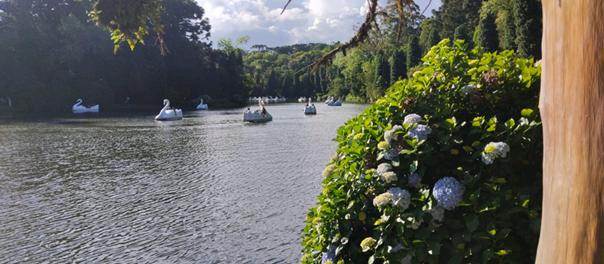
There is still plenty of time to explore and discover everything that lies beyond Umbuntu, starting from the Serra Gaúcha. The experience is not limited to the project itself, and there will be many opportunities to step outside its daily rhythm, meet new people, and gradually get to know the surrounding areas. With time, you begin to realize that the journey extends far beyond the garden and the activities you take part in each day. If you want to discover the secrets of the state of Rio Grande do Sul, you absolutely must immerse yourself in the magnificent landscape of the Serra Gaúcha, with its vineyards and all the surprises you can uncover among the descendants of the region, many of whom are of Italian heritage.
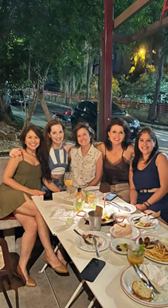
It is a place where culture, history, and landscape intertwine, offering a unique glimpse into the legacy of immigration and the way it has shaped local identity. Walking through its towns and countryside, you can feel how traditions have been preserved and transformed over time, creating a rich cultural mosaic that reflects both European influences and Brazilian realities.
What made me especially happy and proud during this journey was discovering that more than 30 million Brazilians have Italian ancestry.
Even though many of them no longer speak Italian due to historical and political reasons, they remain deeply proud of their roots. Whenever someone heard about my own origins, I could see their eyes light up, and they would often ask me one simple thing: “Tell me about Italy, because our heart is with Italy.”
It was a powerful reminder of how migration and history continue to shape identities across generations and how cultural connections can survive even when language is lost. In those moments, I felt a strong sense of shared belonging, as if distant histories were meeting again through personal stories and emotions.
At the end of the project, I can confidently say that my experience was a special one – perhaps short, but certainly very intense. It was a journey filled with learning, emotions, encounters, and reflections that left a lasting mark on me. Even though the time spent there may not have been long, the depth of what I experienced made every moment meaningful and unforgettable. In the end, what matters most is not the length of the experience, but the impact it has on you—and this one has undoubtedly shaped me in many ways.
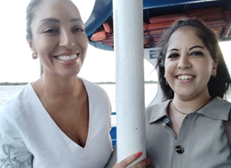
I met incredible people and received their warmth while I was in Brazil, and I continue to feel it even now that I am back, every time they send me a message. This connection comes both from the project itself and from the wider society beyond it. What I carry with me is not only the memory of shared experiences, but also the ongoing relationships that were built along the way. Even from a distance, those bonds remain alive, reminding me that meaningful encounters do not end when an experience is over. They continue to grow, evolve, and accompany you long after you have left.
In Brazil, I learned simplicity, how to accept certain negative aspects, and how to let go of what is not meant for me. It was a process of personal growth that taught me to slow down, to observe more carefully, and to distinguish between what truly matters and what I can release without resistance.
Not everything needs to be controlled or carried forward; sometimes, the most important lesson is knowing when to step back and move on. This experience helped me develop a more balanced perspective, one that values acceptance as much as action and peace of mind as much as ambition. I saw many faces, but I truly met only a few people. Through this experience, I realized that, in the world as a whole, there is still a lack of sensitivity, empathy, and respect for others. It is easy to encounter people in passing, to share spaces and moments without ever truly connecting. But real encounters – those in which you see and acknowledge the other in their depth – are much rarer. This distinction made me reflect on how often we move through life without fully recognizing the humanity in those around us. What I take with me is the awareness that empathy and respect are not automatic; they are choices we must consciously make every day, in every interaction, if we truly want to build more meaningful connections.
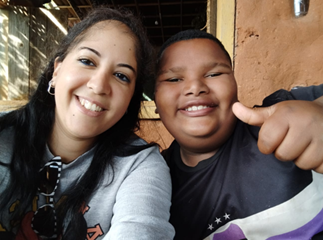
Brazil touched my heart and my soul, and I hope that you, the reader, will also have the chance to live an equally unique experience. It is a place that stays with you long after you leave, not only for what you see, but for what you feel and learn along the way. My time there has left me with memories, emotions, and lessons that I will carry with me for a lifetime.
If there is one thing, I would wish for anyone reading this, it is the opportunity to step into a journey that challenges you, moves you, and ultimately changes the way you see the world. Brazil has left a mark on me that goes far beyond the time spent there, shaping the way I see the world and the way I relate to people around me.
What I carry with me is not only what I have seen, but also what I have felt, learned, and shared. And in many ways, this journey is not something that ends—it continues to live on through memory, connection, and the person I have become because of it.
This was Sarah and this was my journey from Brazil.