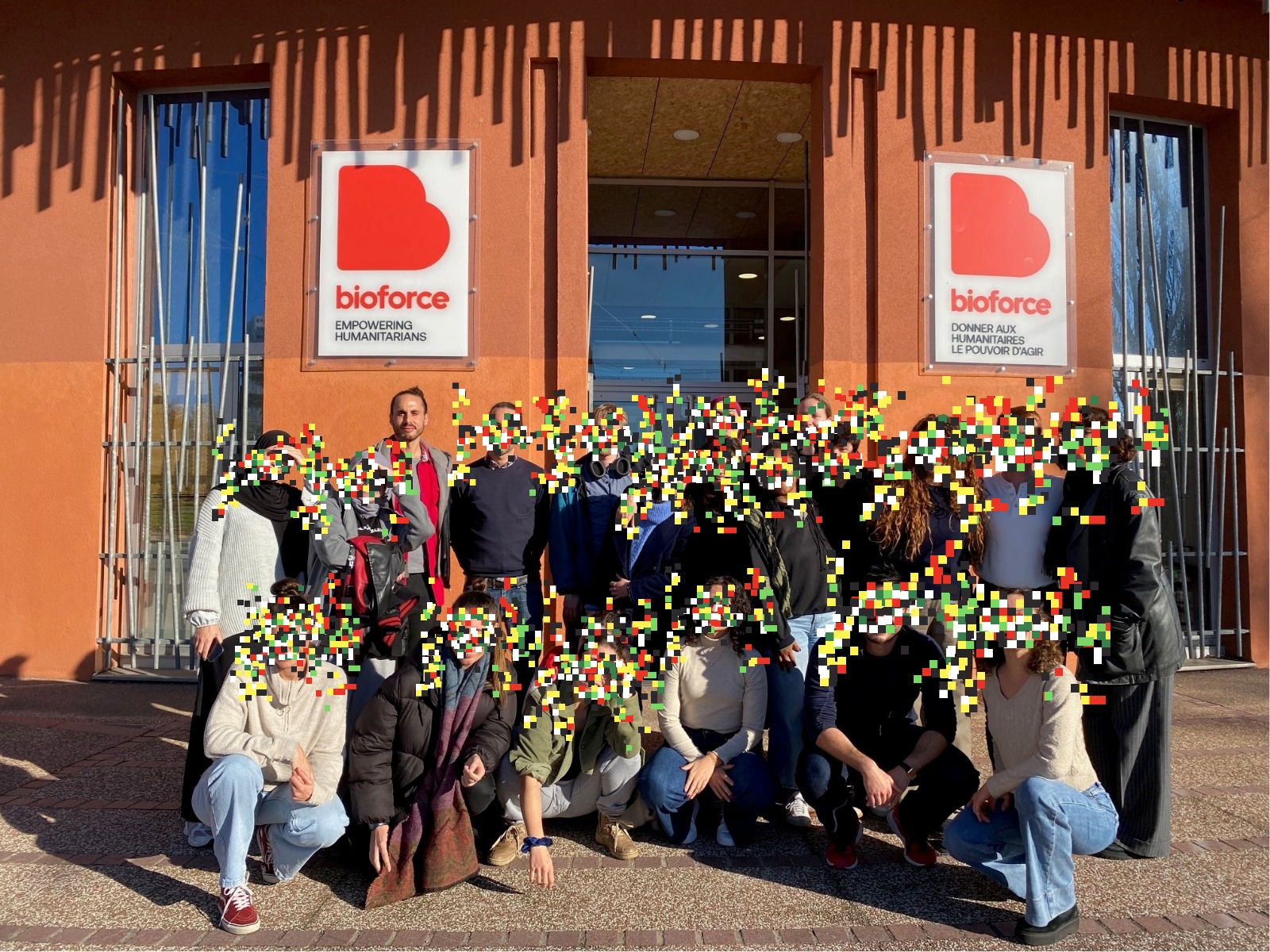
Dear reader,
Who are you ? Why are you reading this ? When and why ? What do you want from me ?
Well, I obviously cannot have the answers to these questions. Therefore, I’ll answer them myself, hoping it might get you intrigued in Humanitarian Aid with the ESC through a SASID project.
- Hold your horses, Steve! you might say (which gives us an element of answer to the first question). I just got here and you’re already using acronyms I don’t know! That’s not fair!
- So is life, my dear reader! Chill out, make yourself a cup of tea or chimarrão (yes, another unknown word. It’s a hint at the local culture. Just look for it, this is not a local guide) and let me guide you through this.
So, the ESC or European Solidarity Corps is a European Program that allows youngsters from 18 to 30 years old to do a volunteering experience in Europe or in a partner country, usually located close to the continent.
- But aren’t you older than 30 and aren’t you in South America right now ?
- Yes, I am. How do you know that ? What are your powers, unknown reader ? Where do you get this knowledge from ?
- Your own brain creating this false dialogue.
- Fair enough! Let’s proceed.
Indeed, I am 33 years old and currently in Brazil. A few years ago, the ESC created a Humanitarian Aid program that allows those same people to volunteer outside of Europe until age 35. However, unlike the regular ESC with which you can volunteer just by applying to projects through the official platform, the Humanitarian Aid program requires you to complete an online course, to do an online test and finally to do a week face-to-face training somewhere in Europe. In my humble opinion, it makes sense if you consider the seriousness of what Humanitarian Aid is. In addition, the flights, the visa, the vaccines, the food, and the accommodation are covered, the insurance is provided and there’s pocket money as well.
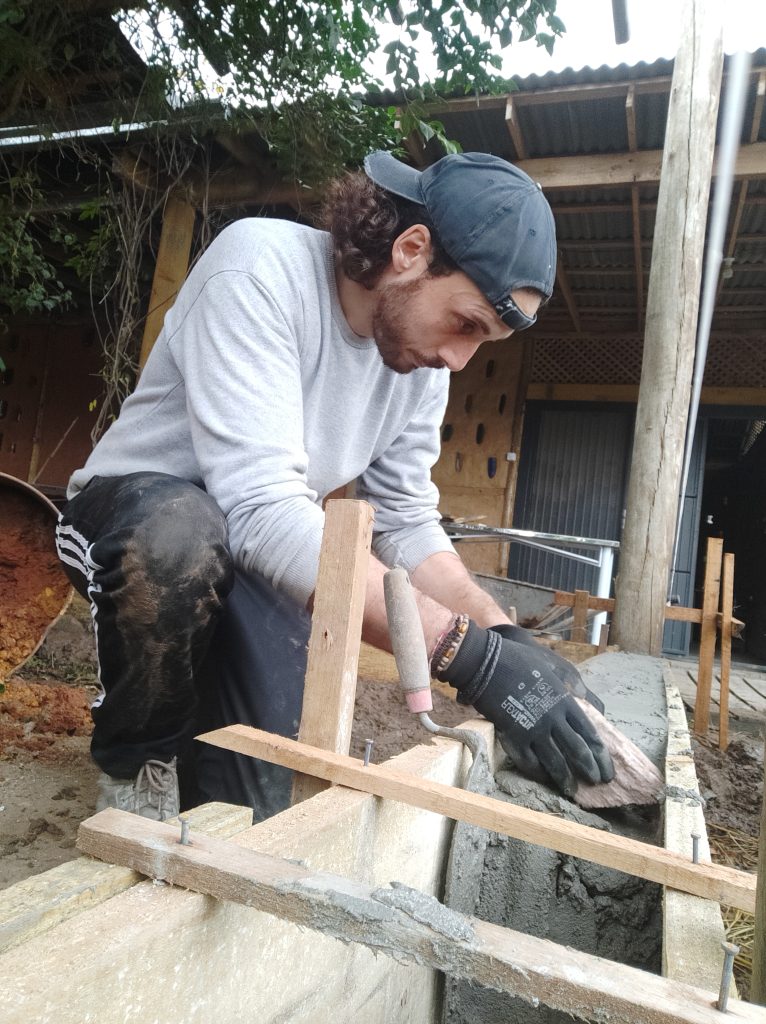
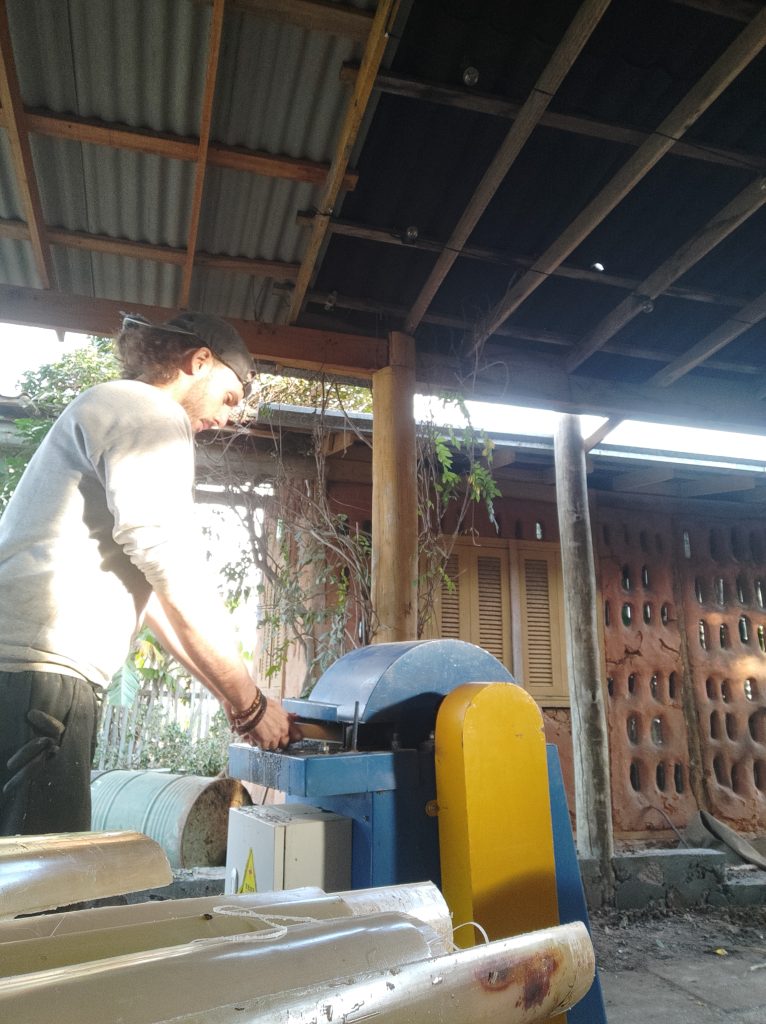
Me, working on the base of the kitchen we are enlarging.
- What do you mean it’s covered ? I don’t have to pay for all of this ?
- Well, you may have to advance the money, but you’ll be fully reimbursed. It’s a program funded by the European Commission.
- Ok, thanks for the overview. What about SASID ? Does it allow me to be sassy ?
- … Awful joke.
- It’s yours.
During the face-to-face training, I found out that there were two types of Humanitarian Aid projects. The emergency ones and the development ones. In order to ensure the safety and the security of its volunteers, the ESC does not send people in emergency settings. SASID stands for Solidarity Action for Sustainable and Inclusive Development. Volunteers work alongside the local volunteers to promote greater inclusion, climate action, environmental awareness, and to support long-term sustainable development.
- So, is it what you do in Brazil?
- No, I teach samba and forró to grandmas. Of course, that’s what I do in Brazil! Why would I be writing all of this otherwise ?
- This guide ain’t getting a tip.
- It’s a free tour anyway. But any contribution is appreciated.
I arrived in mid-April to Alvorada, Rio Grande do Sul and I’ll be there until December this year. I work with an NGO called Umbúntu located in a favela called Umbu. Through its different activities, the organisation aims at having a concrete impact on the local community. Many houses in a favela are rudimentary and some could collapse at any time. That’s why we do bioconstruction. To improve the quality of life of certain people, but also to respect the environment and have the smallest carbon impact as possible. To that matter, we also do permaculture, which is new to many people and shows that there are other ways to produce fruits and vegetables and do so by respecting nature’s resources and pace. We recently prepared parcels of land for the new season. We plowed the land, got rid of weeds, covered and mixed the soil with potting soil and covered it with hay. A couple of weeks later, we planted salads, kale and some culinary herbs.
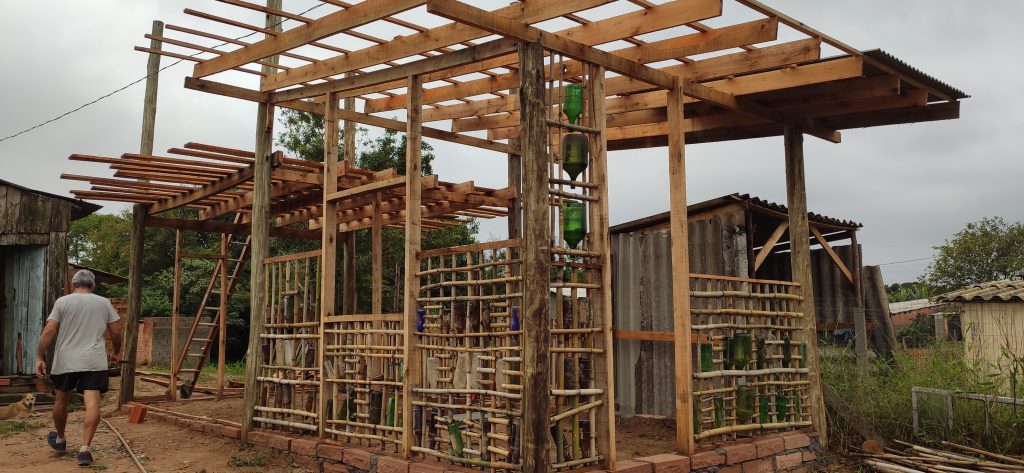
At this stage of construction, we used stones, woods, bamboo and glass.
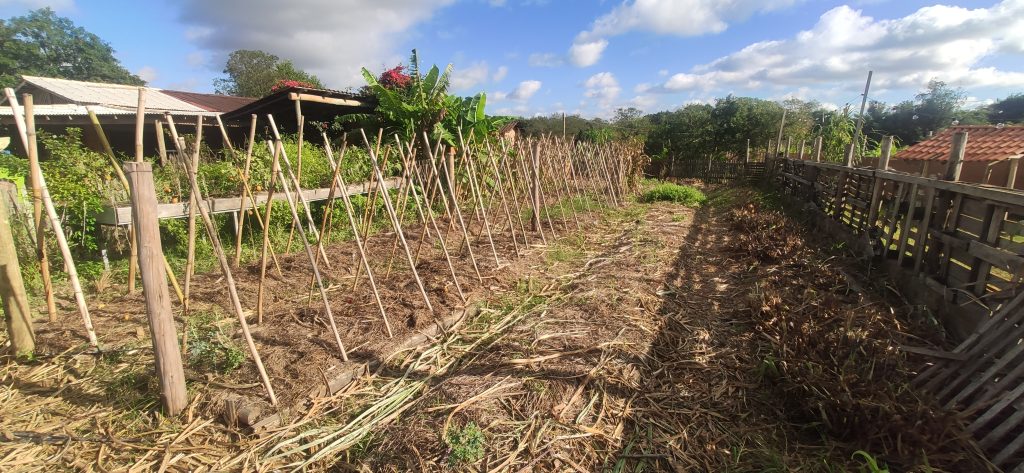
Some parcels of land to grow food.
- Is that it ?
- No, it’s not! But I’m offended by your question. This is already a lot of work and it’s physical work!
- It’s your question. You offended your own self.
- True that… Let’s continue.
In addition to this already very physical and important work, Mr/Mrs reader, the NGO also does organic food distribution once a month and people from the area can also come at lunch time every day to get food for free. The whole facility itself is also a place where people, and especially teens and kids, can come to have a safe space. It allows them to escape for some hours during the day, the violence that takes place down the streets, but also within the household
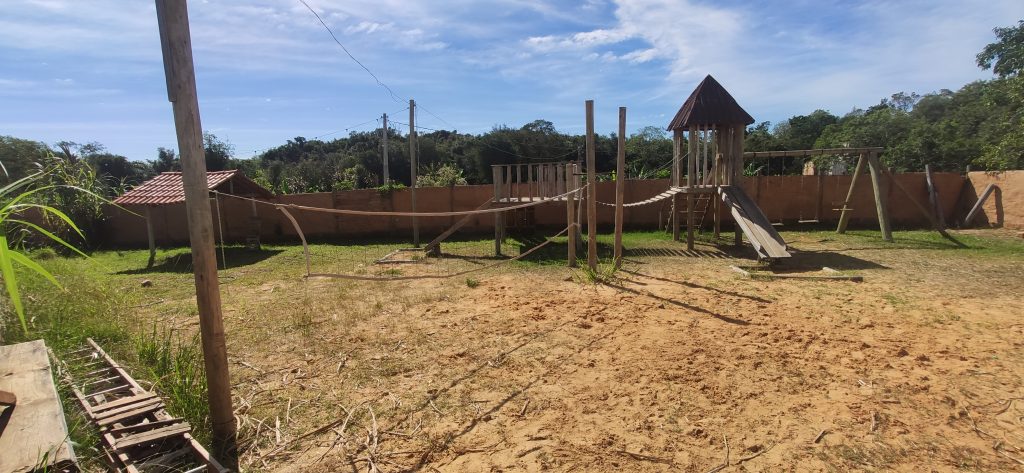
Umbúntu’s playground.
- Bioconstruction, permaculture, food distribution, safe space… It does sound like the NGO cares a lot about its local community.
- It sure does, my dear! And there’s more!
- WHAAAAAAT ! I CAN’T BELIEVE IT!
- … Too much.
- Yes, I felt it. Sorry.
- That’s alright. We do love a bit of excitement. Let’s proceed.
For the past months, Umbúntu has been working on making hair braids with banana fibers. Hair braids are very popular and important in Afro-Brazilian culture, but they happen to be expensive and made out of plastic. So, having this cyclic and sustainable approach to life, the NGO decided to use all the banana trees that were planted in the facility and give them a new purpose.
- I’M VERY INTRIGUED! Sorry. I’m very intrigued. How does it work?
- I’ll explain the different steps and show you some pictures.
First, you cut the tree at its base with a machete.
Secondly, you peel the different layers of the trunk (it’s kinda like an onion).
Thirdly, you cut the extremity and the sides (called filet), cause there’s no fiber in those parts.
Fourthly (I rarely use that one), you pass the fibers into a specific machine that will make it look like a horse tail.
Fively (not sure that one and the upcoming ones even exist), you comb it cautiously to get rid of the dirt and let it dry.
Sixly (I mean, my keyboard seems okay with it), you dye them any colour you want and let it dry again.
Sevenly, you comb it again to make it beautiful.
And that’s all I know so far.
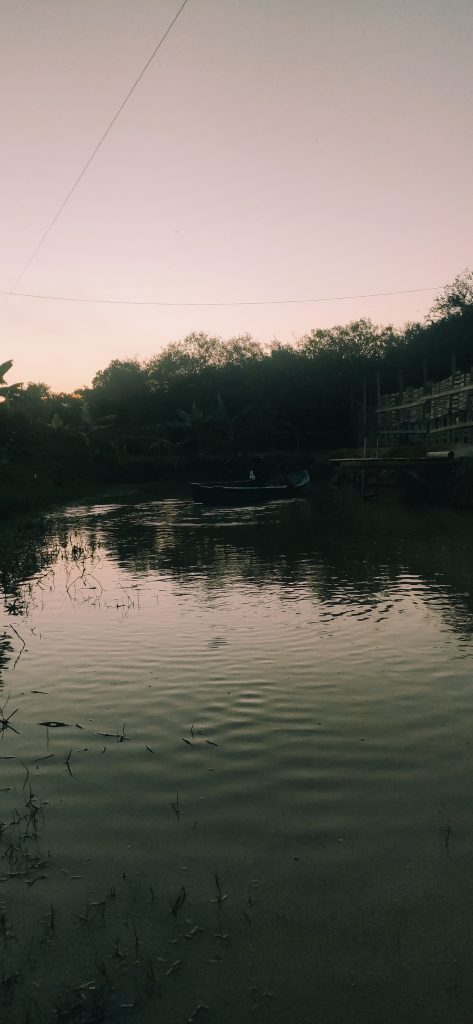
The water point Umbúntu created for the local community to come and swim during hot days.
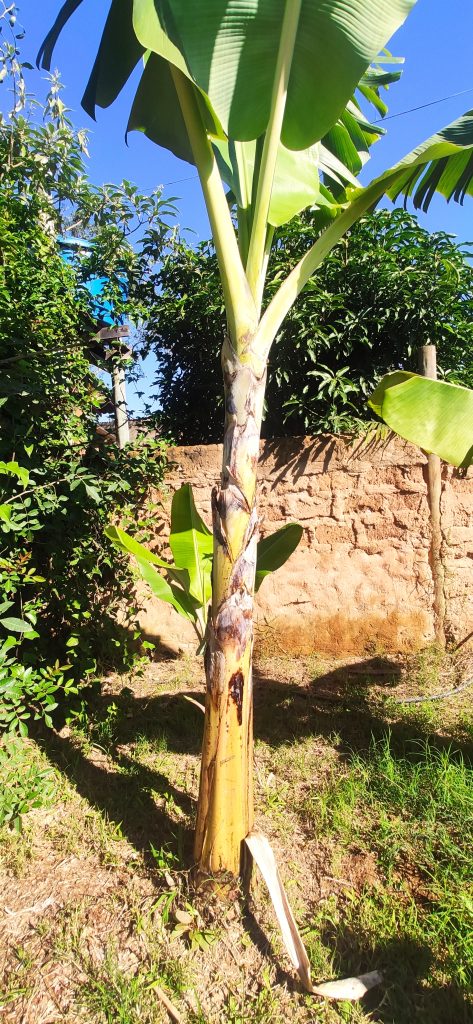
A banana tree.
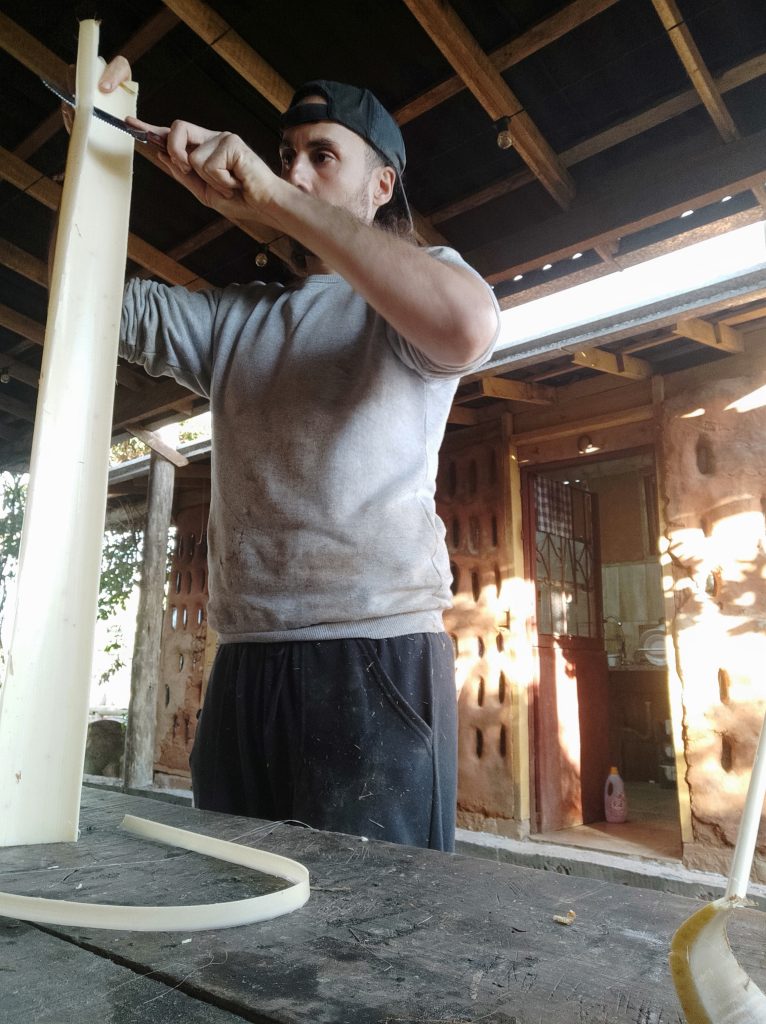
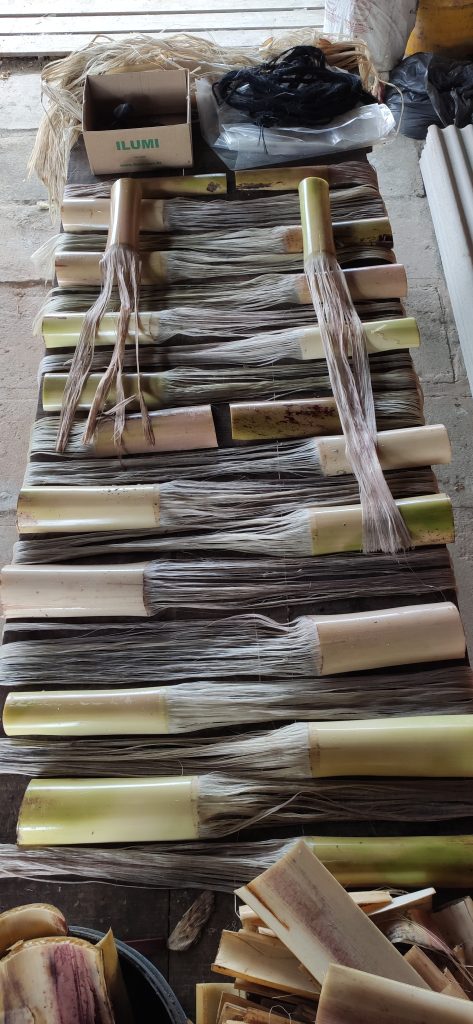
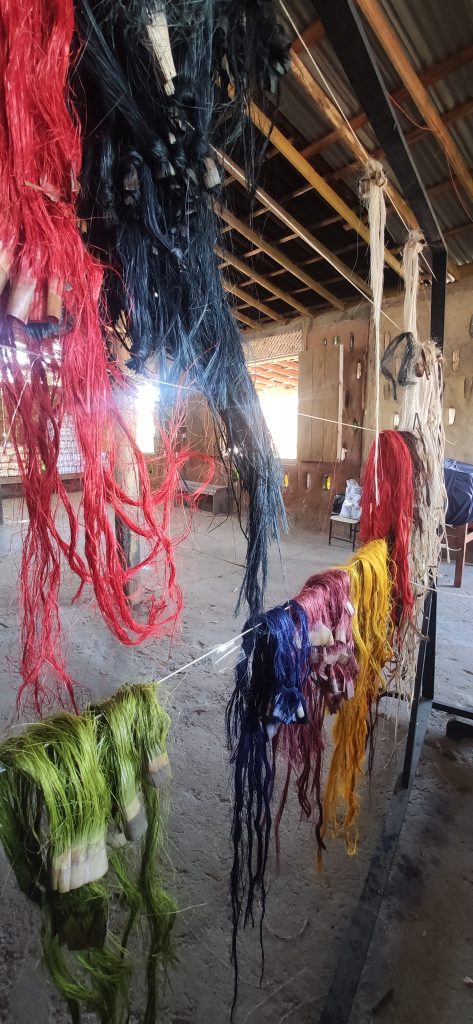
- Definitely not something you do every day.
- Well, you don’t know my life.
- No, I meant it’s not something everyone knows and does and it’s pretty cool.
- Yes, it is. And I’m grateful to have the opportunity to learn about it.
- You mentioned it’s important to Afro-Brazilian culture. Are you working with Afro-Brazilian people?
- Can’t hide anything from you, can I, Sherlock?
- Sarcasm does not look good on you.
- Agree to disagree. Let’s proceed.
When I first arrived, I was told that in the state of Rio Grande do Sul, racism is a real issue. After more than two months, I’ve realised that people who live in city centers are mostly white and the people living in the favela are Black. Umbúntu alone cannot solve this issue, of course. But it tackles it in a clever way by celebrating the Afro-Brazilian culture through capoeira and maracatu classes that take place every Saturday. I have the opportunity to try them both each week. Capoeira is a challenge to me, as I’m flexible as a rock. But I love watching the performance that takes place at the end of each session. All the participants form a circle, sing and play music while two people face off in the middle. Music and spirituality is also expressed through Maracatu, which to make it short (do your own research) is an Afro-Brazilian rhythm with percussion. It’s loud, colourful, spiritual and joyful and on some occasions we actually perform in different places in front of audiences.
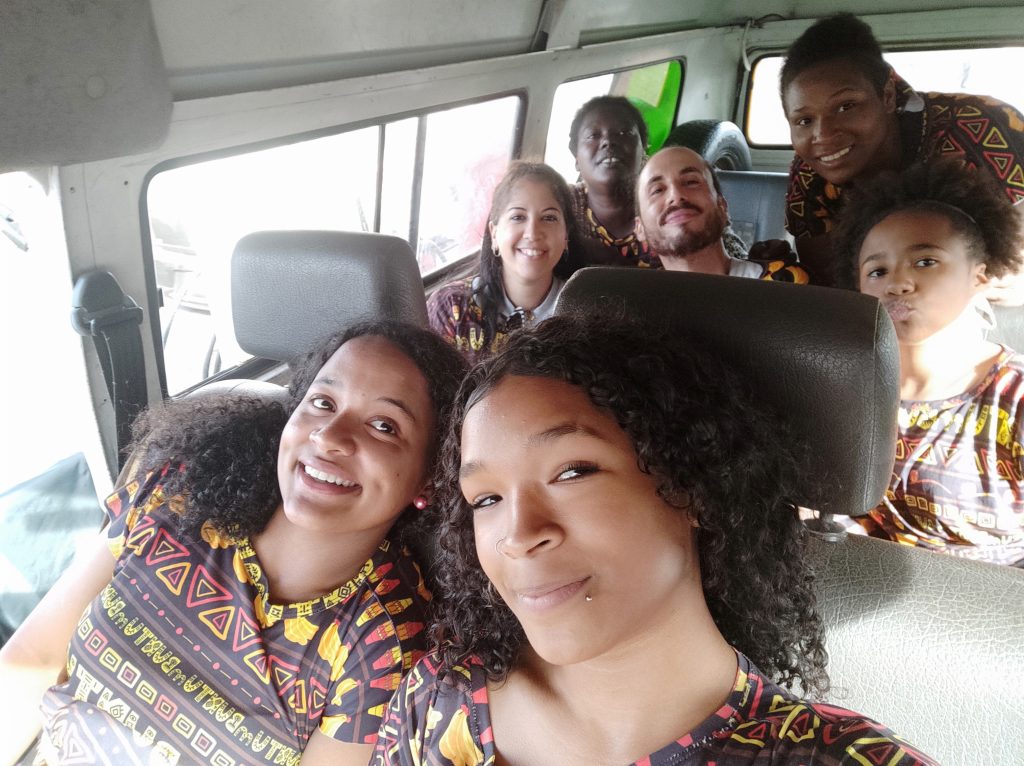
With Juliana, Liliana, Beatriz, Jessica, Naty and Sarah, on our way to perform maracatu.
- Ok, now we know a lot about your work, but what about your life outside of it. Married? Kids? Blood type? Any kidneys to give ?
- Very specific questions. No, no, B+, I plan to keep them both, thank you.
- That’s a pity…
- Wait, what ?!
- I said what about the city? Tell us how it is where you live and what you do in your free time.
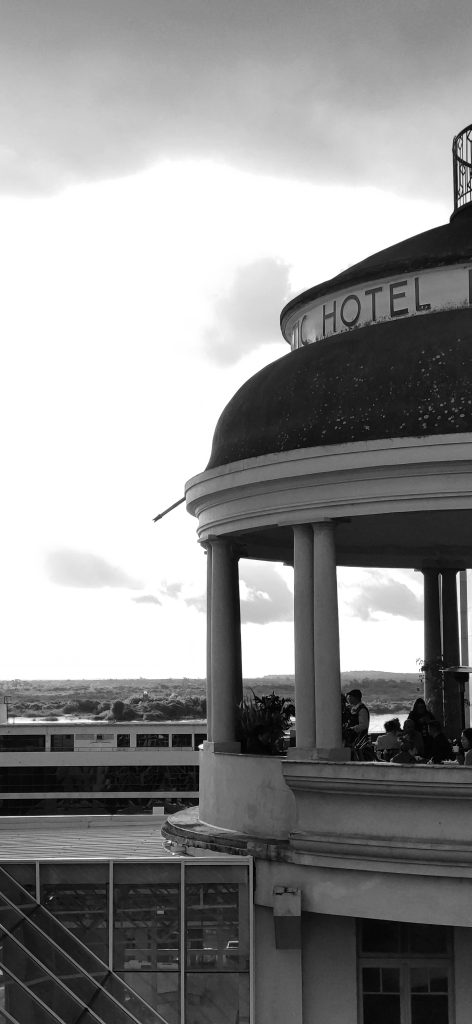
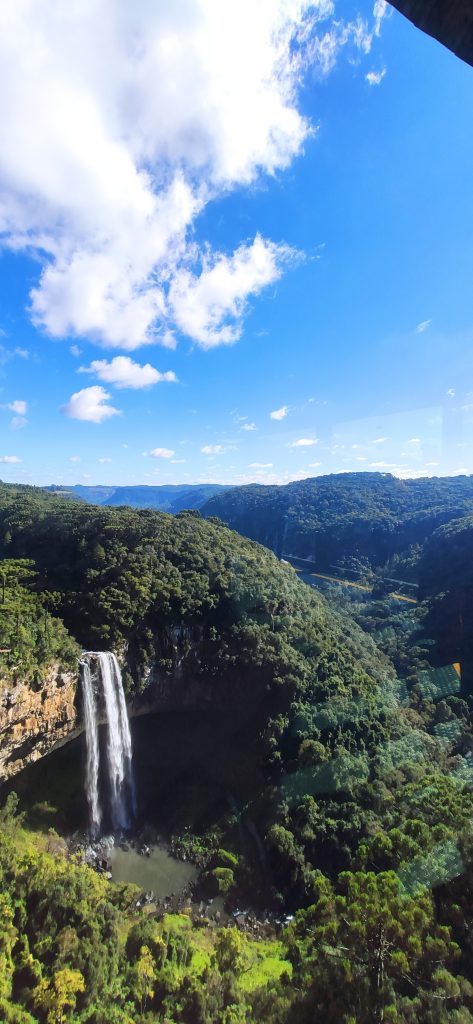
I live in the center of Alvorada where there are many shops and restaurants. But to be fair, I do not spend a lot of my time there, because culturally speaking, it does not have much to offer. I go to Porto Alegre (POA), the capital, twice a week for my Portuguese For Foreigners class and I love it. I love the energy of big cities. In POA, I go to the movies, museums, exhibitions, cultural centers, live music, bars, restaurants… you name it. I didn’t get a cultural shock when I first saw it, because it reminded me a lot of Southern Europe, like Sicily or Athens for instance. Indeed, I’m far away from the classical Brazilian stereotypes (the beach, the sea, the sun, carnaval…). It’s currently winter here and Rio Grande do Sul is actually very cold.
- You mentioned learning Portuguese.
- Careful reader. I appreciate it.
- How is it communicating with people? Do they speak English or any other languages?
Well, my coordinators and European mates do, of course. But the local people I work with, not a word! So, at first it was complicated, but I’m getting used to it. I’m far from being fluent, but I can have conversations. For sure speaking other Latin languages is a precious help, but overall here people are very patient and always curious and happy to speak with foreigners. I’ve had so many conversations with Uber drivers, always eager to know what the heck a French guy is doing in Alvorada. By the way, I forgot to mention that to go to work and come back home, the Uber is paid back by the program. But going back to the language, I’d advise you to start learning it before going to any foreign country. It will make your life more comfortable.
- Talking about comfort, how’s your accommodation?
- That’s a smart transition.
- Thank you.
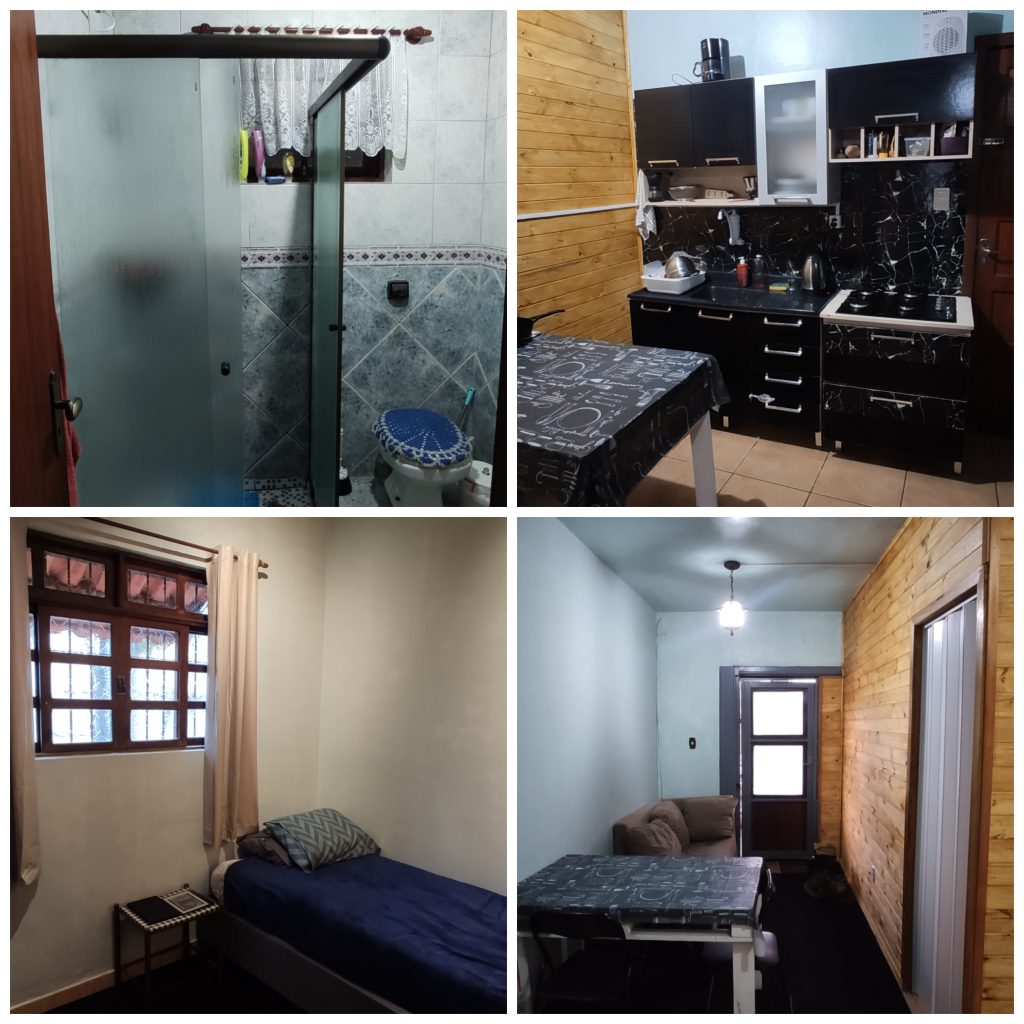
For the first five weeks, I was living in a very comfortable apartment with another European volunteer. When she left Brazil, I had to move with another European volunteer, in another accommodation. It’s a former garage renovated into an apartment next to a family’s home. At first, I didn’t like the idea of living with a family, because I’m very autonomous. However, I’ve been loving the experience so far, because the family is so lovely, helpful and completely respectful of our privacy. Furthermore, it’s a great immersive experience into the local culture. We eat, watch TV, and chat together whenever I feel like it or when they invite me over.
- Happy for you, mate! But let’s wrap it up. What’s one thing you specifically like in your experience and what’s something you don’t?
- I honestly love the fact that people will easily interact with me. When walking down the street or standing in a line or out in a bar, people would just ask you how you’re doing and start making conversation. I also enjoy working the land. On the other hand, buildings here are not built to protect you from the cold and even indoors, you’ll have to wear your coat.
- Why did you decide to do this SASID project in the first place ?
I started volunteering when I was 19 years old, in France, in an organisation that helps people in need. I did it for six years. Then, I had the opportunity to do several short
term volunteering projects in Europe with the ESC and even a long-term one in Latvia. Therefore, to me it made sense to expand my volunteering experience further. In addition, the intercultural dimension of the project is very important to me.
- Is it going like you were picturing it before going to Brazil?
- Somehow, yes. I think thanks to my previous experiences and thanks to the project description and the research I did, I was able to picture an accurate reality of what my life would be like here. Adaptability is a key quality. I do really enjoy my life here and working in a favela with people from there is always a reality check of how privileged I am.
- Anything else you’d like to share with us all, curious readers that we are ?
- Oh, it’s more of you now ? Well, I didn’t know where to put it in this article, but I had the opportunity several times to go to different schools to teach English and I bloody enjoyed it! It doesn’t get more authentic than that. Kids and teens are just being curious, honest and funny and on top of that, it allows me to assist in another way as learning foreign languages in Brazil is difficult, because there’s both a lack of teachers and the overall level is low.
- Anything else you’d like to know about my experience here, dear reader ? Cause I’ve been working on this article for the past two weeks whenever I had time and I’d love to send it at some point.
- What’s your favourite colour?
- Oh, get lost!… Burgundy. Thanks for your interest and if you’d like to know more, do not hesitate to ask PIYA to get my personal contact.
- Well, I am you, so I do have your contact.
- I meant real readers out there.
- WOW! Denying my own reality, that hurts a lot…
- I’m sorry. I guess I won’t get that tip, right ?… Right ? Right? Hey! Where did you go ? It disappeared…
- BOOH!
- AAAH!
- I fulfilled my mission to help you write this article. I now have to leave.
- Ok, bye!
- I was hoping for a more emotional farewell, but it is what it is. Goodbye.