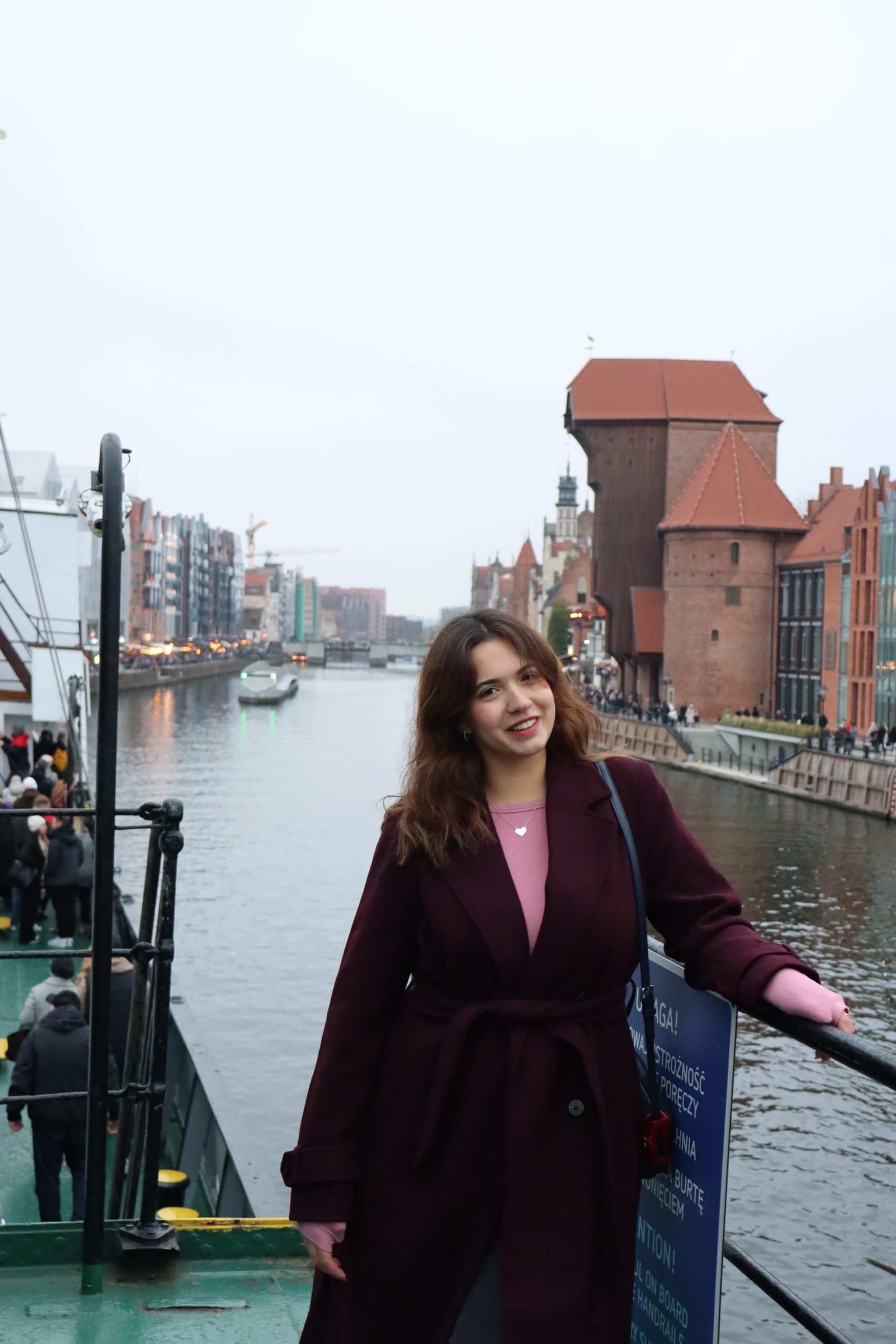
Hello everyone—or, as I say almost every day here, “Dzień dobry!”
Since I don’t speak much Polish yet, I often greet people who don’t speak English with a simple “Dzień dobry” and a smile. Surprisingly, that’s usually enough to start a friendly interaction.
I’d like to share my volunteering journey in Poland with you.
I first learned about the European Solidarity Corps (ESC) thanks to Pi Youth Association (PIYA), which gave an ESC seminar at Ege University. Ever since my first year at university, I had wanted to become a volunteer. However, I knew I wanted to participate in a long-term project, so I felt it would be the right decision to wait until after graduation.
During my final year at university, I joined Pi Youth Association as an observer volunteer. I interviewed volunteers who had returned from projects abroad and prepared reports based on their experiences. Through these conversations, I had the opportunity to learn about different countries, cultures, and volunteering projects, which helped me better understand what I was looking for in my own ESC experience.

I started applying for ESC projects in January, but for a while I didn’t receive any responses. Then, in August, one of my closest friends sent me the application link for the very same project she had participated in two years earlier and encouraged me to apply if I was interested.
Of course I was.
I immediately sent my Europass CV and was soon invited to an interview. The interview went really well, and I was informed that I had been selected to start the project in October. After receiving the good news, I immediately began my visa application.
Throughout this complicated process, Pi Youth Association (PIYA) was always there to support me. They guided me every step of the way with detailed emails explaining exactly what I needed to do, making the entire process much less stressful.
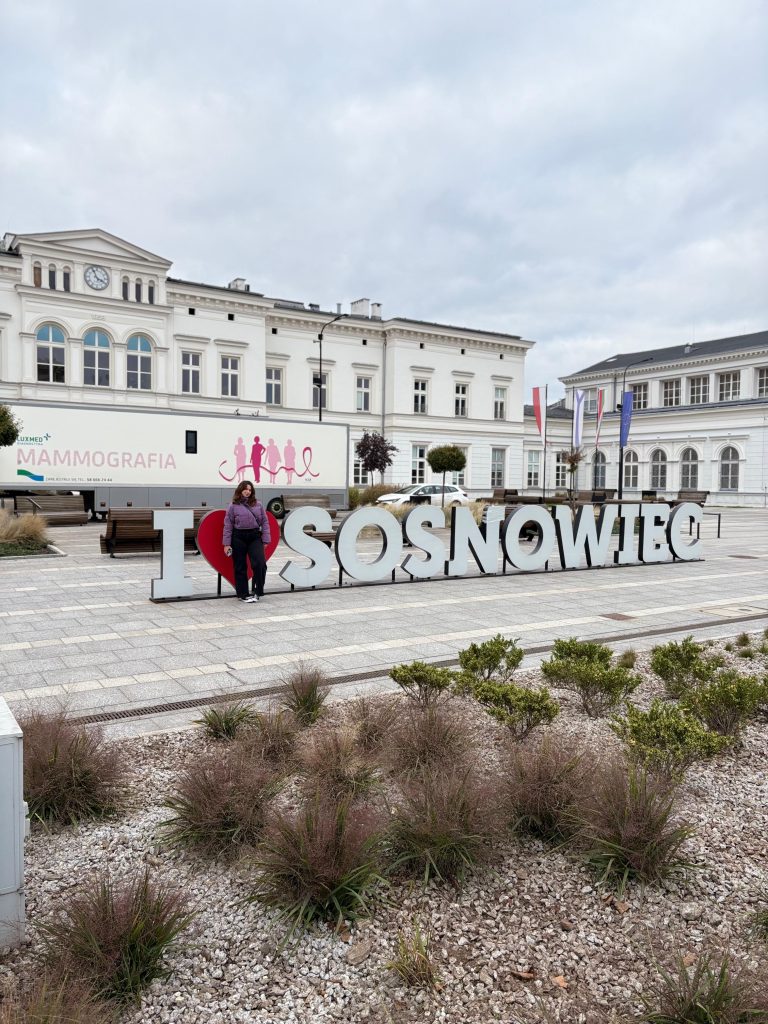
When I finally arrived in Poland in October, everything felt unfamiliar. Sitting on the bus and hearing conversations in a language I couldn’t understand made me quite nervous at first. Fortunately, as soon as I got off the bus, my mentor, Peter, was there to welcome me. He immediately made me feel comfortable and shared plenty of useful advice about daily life, helping my first day in Poland start on a much more positive note.

The school where I volunteered was a special education school for children with disabilities. Before I arrived, I had many questions running through my mind: “Will they like me?” “How will we communicate?” “Will I be able to connect with them?”
Those worries disappeared almost immediately.
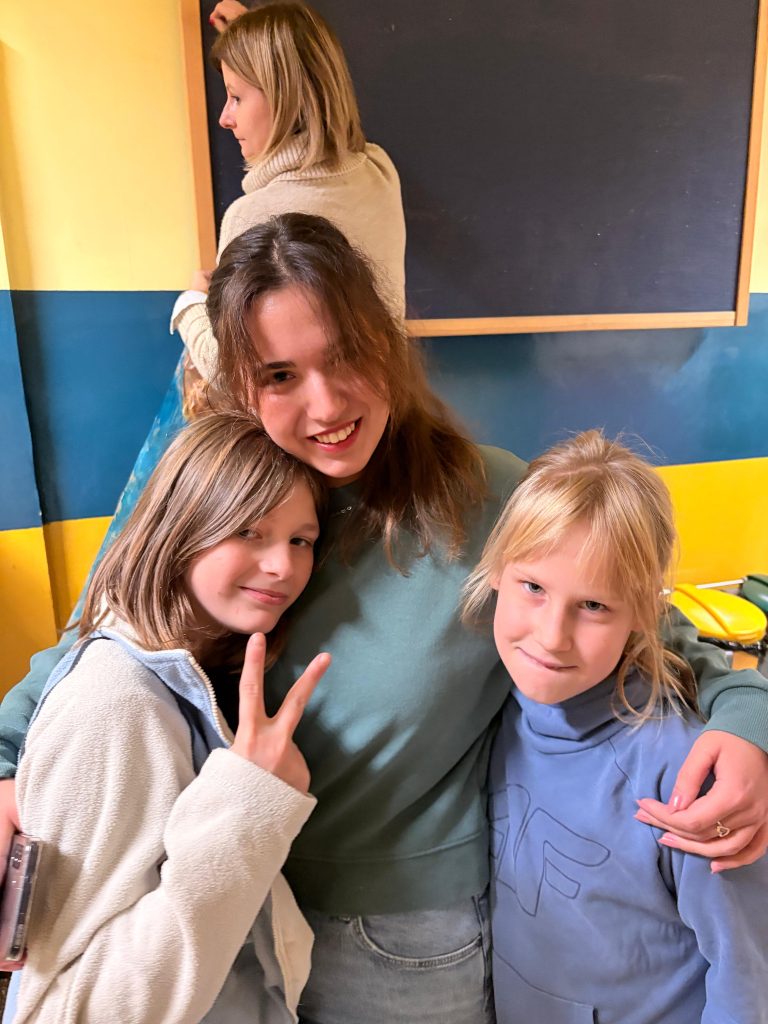
When I went to the school the next day, all the children were excited and curious to meet me. Peter first introduced me to the class, and then we spent time playing games together. At the end of the day, as I was leaving the school, the children came over to hug me.
At that moment, I realized something truly important: I didn’t need to speak the same language to build a connection with them. All I needed was a smile, kindness, and genuine affection. Those simple gestures were enough to create a bond that words never could.
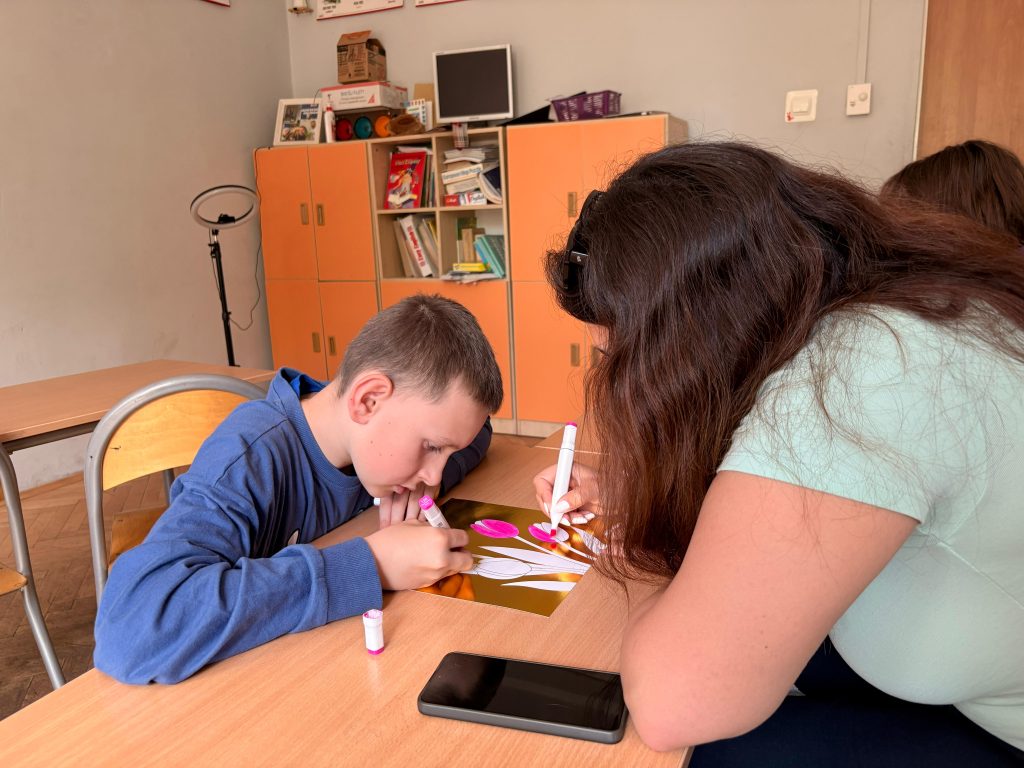
There were countless moments at school that filled me with happiness. The children would draw pictures for me, make handmade bracelets as gifts, or sometimes simply come over for a hug. Even those small gestures were enough to brighten my entire day. Some of my favorite memories were the moments we spent learning and playing games together on the interactive whiteboard. Although we didn’t always speak the same language, we could still laugh, have fun, and enjoy each other’s company. Once again, this experience reminded me that meaningful communication doesn’t always require words.
Throughout my volunteering experience, I learned many valuable lessons. One of them was that communicating with adults outside the school could sometimes be challenging. There were occasions when people weren’t even interested in reading the translation on my phone. But with the children, it was completely different. For them, even a simple hug could say so much. They would often come to me saying, “tłumaczenie, tłumaczenie” (“translation, translation”), asking me to open the translation app on my phone, and within seconds we were communicating and sharing smiles.
There were also many unforgettable events at the school. On Dzień Świętego Mikołaja (St. Nicholas Day), Peter, the English teacher Thomas, and I prepared a dance choreography together. By the end of the performance, all of the children had joined us on stage, and afterwards we handed out chocolates and sweets. The school also organized a dance competition, where Peter and I performed the opening dance to a song by Tarkan. It was a wonderful way to encourage the children and create an energetic atmosphere.
One particular moment from that day will always stay with me. A young student named Łukasz was about to perform with a group of girls, and he was visibly nervous. I happened to be filming the performance. Just before he went on stage, he looked at me. I smiled and gave him a thumbs-up to let him know everything would be okay. He smiled back at me. You can even see that moment in the video. It was then that I truly realized how much of an impact I had made on these children’s lives.
Some of the children even called me by the name of the volunteer who had been there two years before me because they said we looked very similar—and because they still remembered and loved that volunteer so much. I sincerely hope that one day they will remember me with the same warmth and affection.
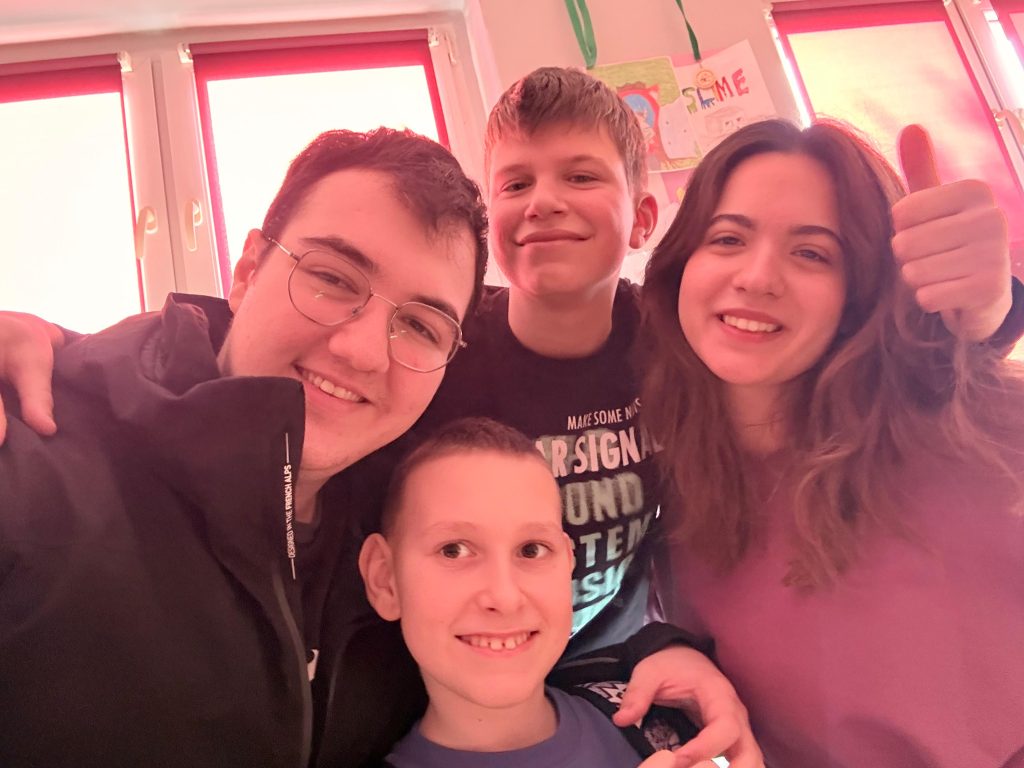
In addition to my time at the school, I also participated in the Arrival Training and Mid-Term Meeting organized for ESC volunteers. These events gave me the opportunity to meet other young volunteers from all across Poland. Although we came from different corners of Europe and had different backgrounds, we were all there for the same purpose: to learn, contribute, and grow through volunteering.
Outside of the project, I also had the chance to explore many European countries and cities. One weekend, my flatmate and fellow volunteer and I traveled to Gdańsk. During the Christmas holidays, we visited Paris, Brussels, and Amsterdam. I finally tasted Paris’s famous croissants, enjoyed plenty of Belgian waffles in Brussels, and experienced the magical New Year’s atmosphere in Amsterdam, where the city was illuminated by spectacular fireworks displays.
Later, we continued our travels to Prague, Vienna, Bratislava, and Budapest. One of my favorite memories from Prague was trying the traditional trdelník pastry. And I certainly can’t forget the enormous schnitzels in Vienna!
During the Easter holidays, we traveled to Italy, where I joined a pasta and tiramisu workshop in Verona. It was a wonderful opportunity to discover Italian cuisine from the inside and enjoy dishes that I had prepared myself. I also had the chance to visit my closest friend, who lives in Germany.
When my school temporarily closed because the eighth-grade students were taking their national exams, we took the opportunity to travel to Barcelona and Madrid. Swimming at the beach in Barcelona was an unforgettable experience. I also made day trips to the historic Polish cities of Kraków and Wrocław, each offering its own unique atmosphere and fascinating history.
These journeys allowed me not only to discover new places but also to experience different cultures, cuisines, and ways of life. They became an unforgettable part of my ESC adventure, broadening my perspective far beyond the volunteering project itself.
Finally, I would like to say one last thing.
Some people see volunteering as something unimportant or a waste of time. They often ask questions like, “What are you going to do for an entire year?” or “Will it really benefit your education or career?” But from my perspective, volunteering is something that everyone should experience at least once in their lifetime.
During these nine months, I learned far more than I ever expected. I discovered new places, experienced different cultures, met incredible people, and grew both personally and professionally. Most importantly, I had the opportunity to fulfill a childhood dream by experiencing, even for a short time, the profession I had always wanted to pursue.
Looking back, I can confidently say that this experience gave me much more than I could ever have learned in a classroom. It taught me independence, empathy, adaptability, and self-confidence. Above all, it showed me that sometimes the most valuable lessons in life are learned not through textbooks, but through the people we meet and the experiences we dare to embrace.